Outside Our Walls

Taking Expert Care to the Streets: UC Health Reaches the Homeless Population

Jan. 29, 2026

The Cincinnati Street Medicine program brings compassionate, multidisciplinary health care directly to people experiencing homelessness in Cincinnati. Through a mobile medical clinic, we deliver comprehensive care to patients beyond hospital walls.


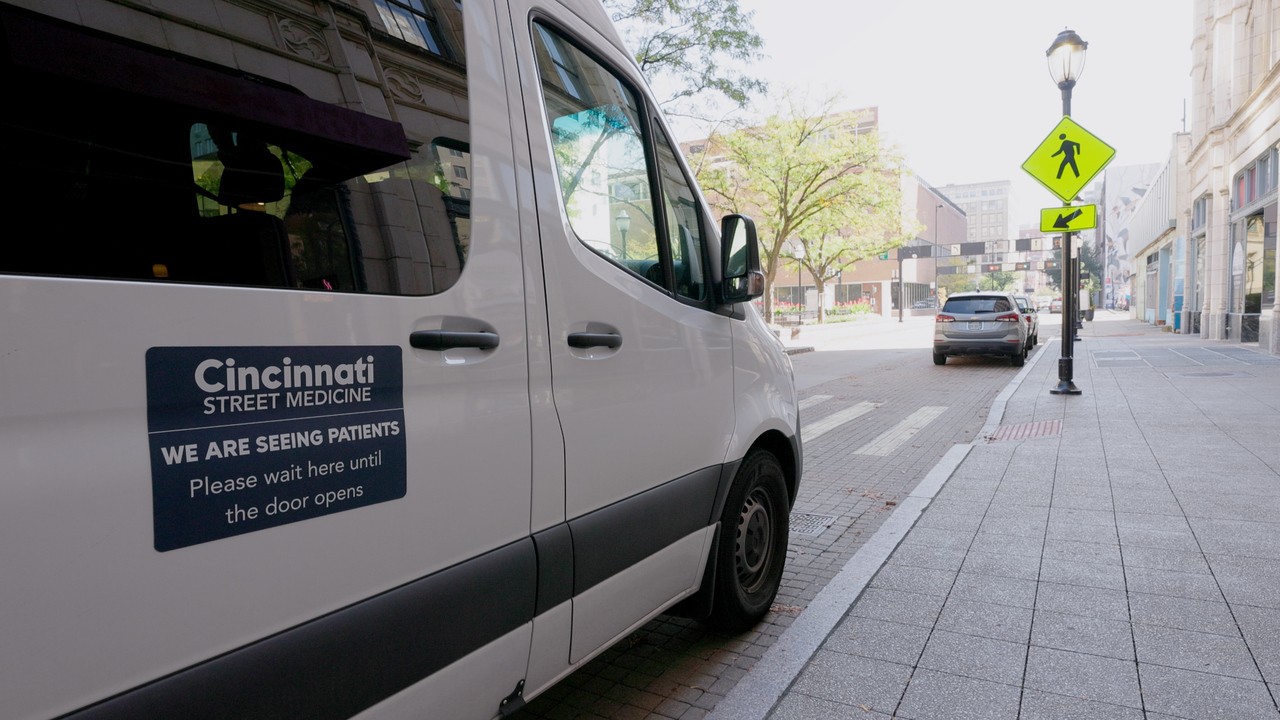
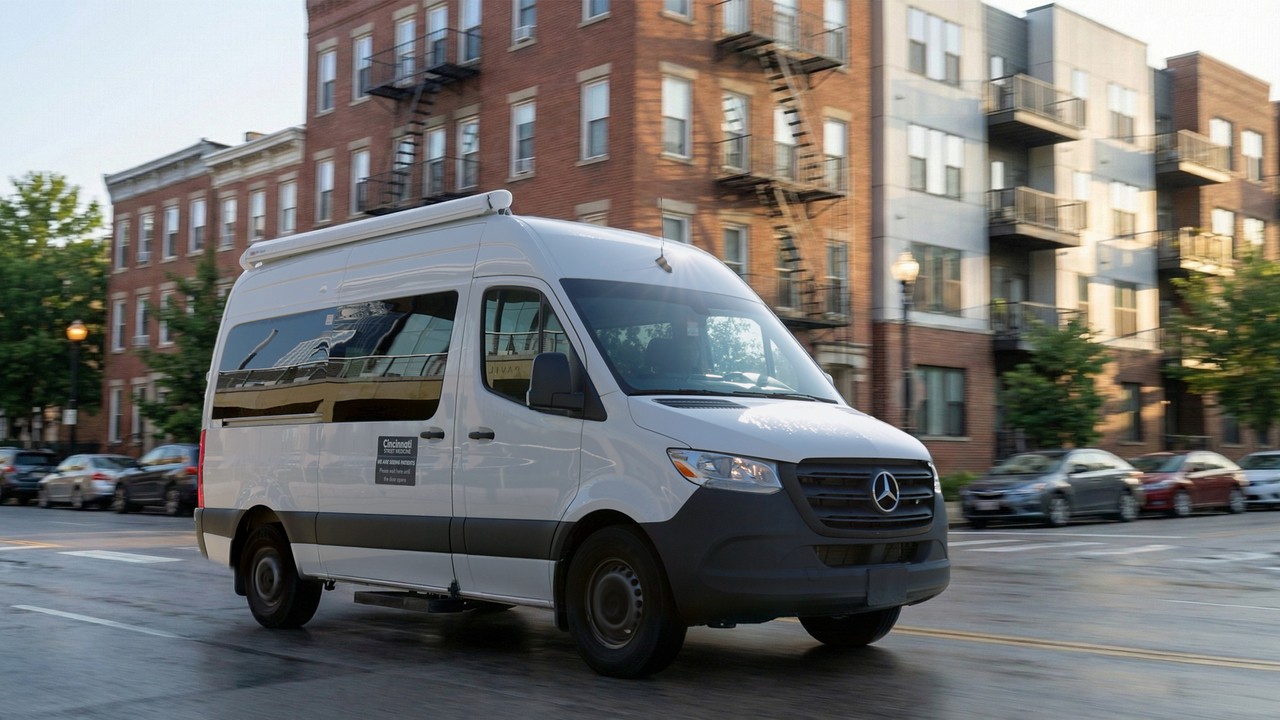
UC Health's Cincinnati Street Medicine program van in downtown Cincinnati

The Cincinnati Street Medicine program brings compassionate, expert medical care directly to people experiencing homelessness across the Greater Cincinnati region.

Cincinnati Street Medicine Meets Patients Where They Are

On foot, and now on wheels, UC Health physicians and care team members are delivering expert care right on the streets of Cincinnati: 

  • Care without barriers: Cincinnati Street Medicine delivers medical care directly to individuals experiencing homelessness, removing obstacles like transportation, access, and trust that often stand between patients and care.
  • Trust-first, team-based approach: A multidisciplinary team builds relationships on the streets – listening first, meeting people where they are, and creating realistic care plans rooted in dignity and respect.
  • Boundless care in action: From street outreach to a fully equipped mobile medical van, the program reimagines how health care is delivered, ensuring compassionate, comprehensive care extends far beyond hospital walls.

Community organizations or individuals seeking to connect patients with the Cincinnati Street Medicine team can contact NeighborHub Health at 513-386-7899.

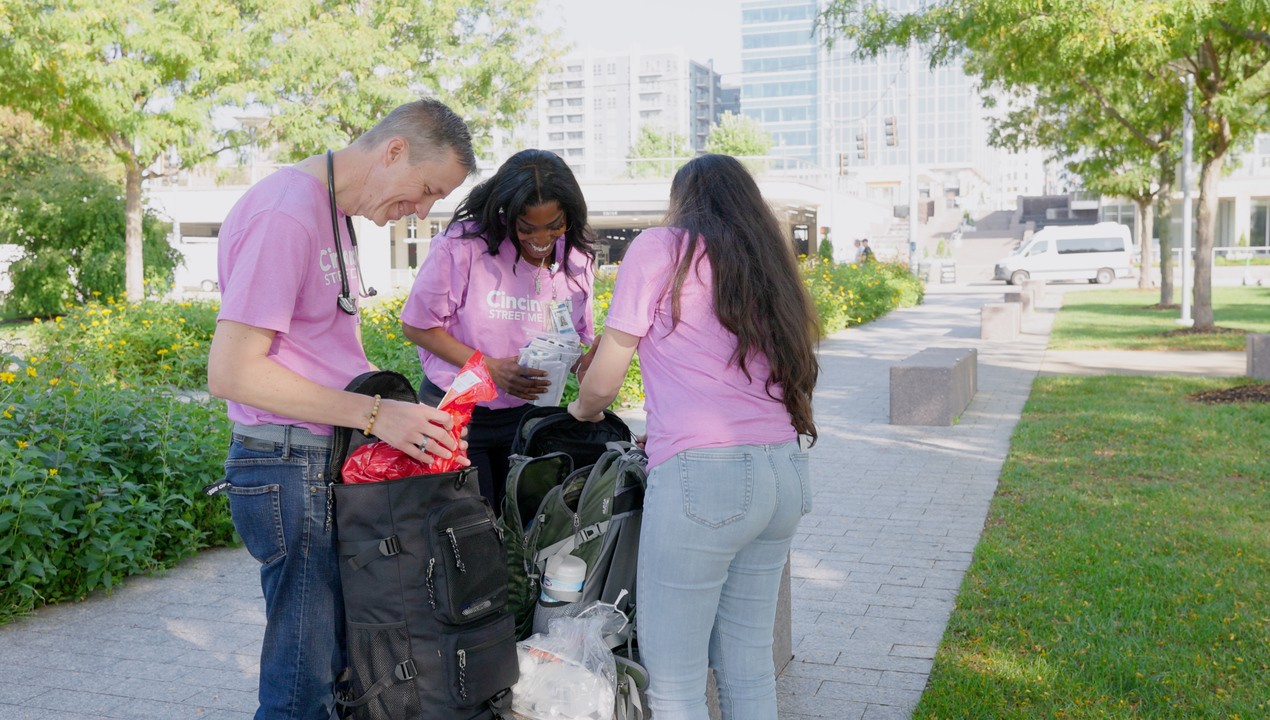
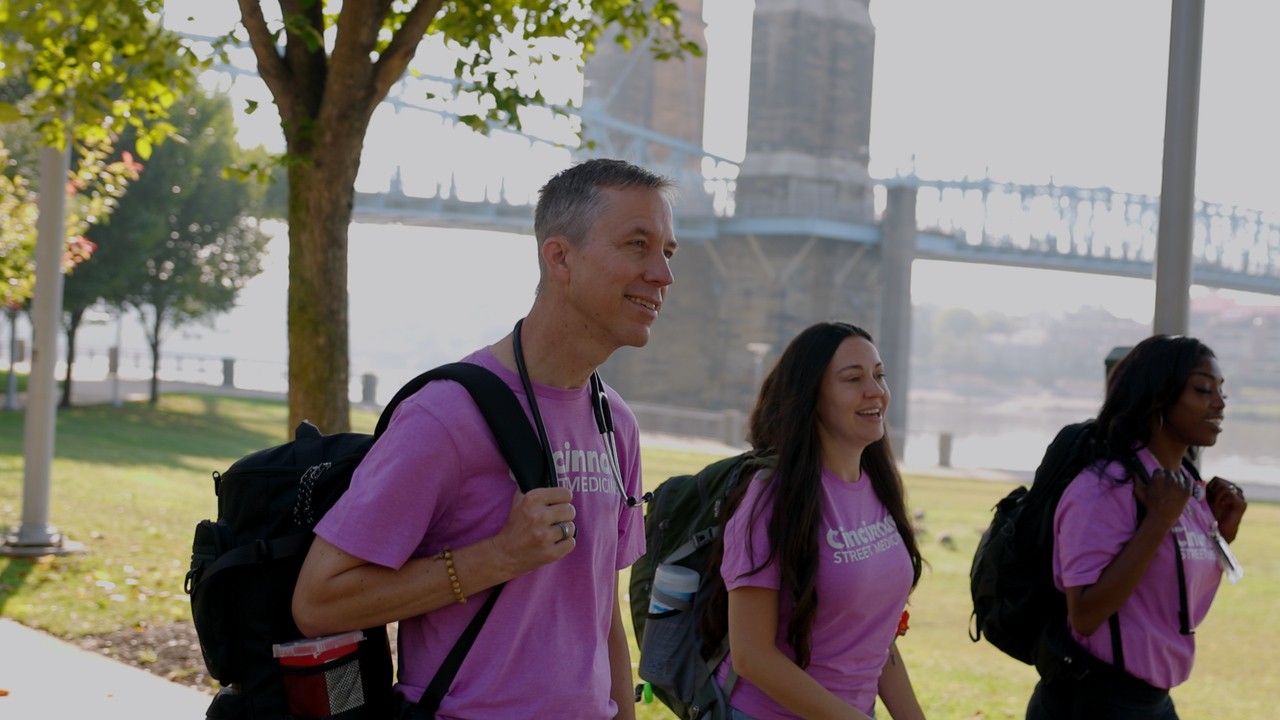
UC Health Street Medicine teams walks along the Cincinnati riverfront preparing for a day of meeting with patients

Removing Barriers to Access

For many people experiencing homelessness, accessing health care isn’t easy. Getting to appointments can be a challenge, treatment plans often assume a level of stability they don’t have, and too often, people feel overlooked or unheard when they do seek care.

At UC Health, being Boundless means refusing to accept those barriers as inevitable. It means reimagining how and where care is delivered and being present for patients wherever they are.

That belief is at the heart of the Cincinnati Street Medicine program, a multidisciplinary team delivering care directly to individuals experiencing homelessness across our community.

Cincinnati Street Medicine's mobile clinic van. The white Mercedes-Benz Sprinter van is parked on a street in downtown Cincinnati to meet patients where they are.

Building Trust, One Conversation at a Time

“So many people who are experiencing homelessness feel unseen,” said Joe Kiesler, MD, a UC Health physician with Cincinnati Street Medicine. “There’s a lack of trust in health care and the health care system. So, we go out and try to make that first step - engaging with people - and then provide medical care on top of that.”

That first step is often the most important. The Street Medicine team doesn’t wait for patients to come to a clinic or emergency department. Instead, they head into encampments, underpasses, and community spaces with backpacks stocked with medical supplies and time to listen.

Care begins with relationships. Outreach workers and peer support specialists who are familiar with the community help build trust, create continuity, and ensure patients feel respected and understood. For many, this approach transforms health care from something intimidating into something accessible.

A Mobile Clinic That Brings Dignity to Care

As the program expanded, the need for a more private and comprehensive care environment became clear. Thanks to grant support from the OneOhio Recovery Foundation, the team now operates with a mobile medical van, continuing to build on what’s possible on the streets.

“The van has been huge,” said Alexis Kimmel, MD, an emergency medicine physician with the program. “It gives us a physical space where we can do more sensitive exams and procedures, and a more comfortable environment for patients.”

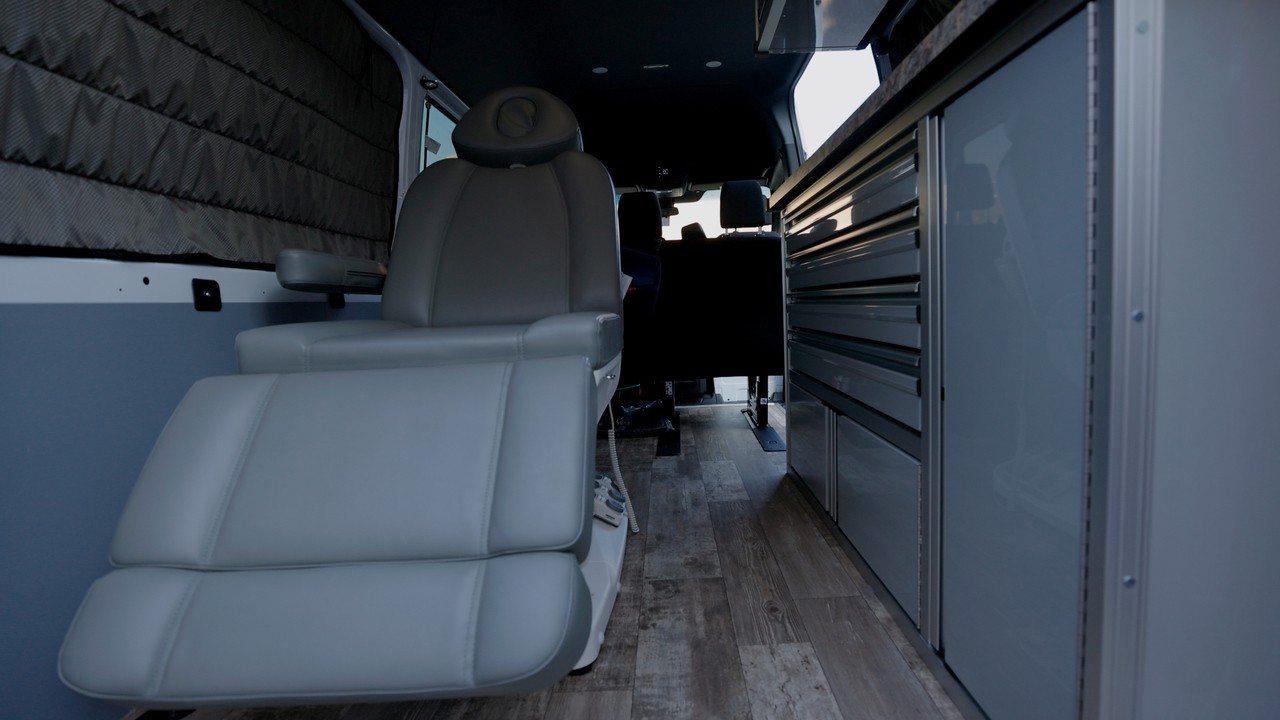
Inside the van is a fully equipped exam room, allowing the team to draw labs, perform evaluations, deliver medication, and create care plans without asking patients to navigate multiple locations or appointments. The team can also cover more ground to reach more individuals, including those in more remote locations. For individuals without transportation, this difference is life-changing.

“It’s a big step for our patients,” said Valarie Dowell, a member of the Street Medicine team. “Instead of saying, ‘I can do this part, but you have to go somewhere else for blood work or medication,’ we can do it all right there.”
Inside the UC Health's mobile clinic

Meeting the Whole Person, Not Just the Diagnosis

Patients served by the Street Medicine team often face complex challenges, including high rates of substance use disorder and chronic illness. But the team’s approach goes beyond medical treatment alone.

“Street medicine is about meeting people not only physically where they are, but emotionally and cognitively as well,” said Kelli Jarrell, MD, an emergency medicine physician and a member of the care team. “It helps people feel seen.”

Treatment plans are built with real-world barriers in mind. Providers consider whether a patient can realistically access follow-up care, store their medications, and adhere to instructions, and adjust accordingly.

“There’s a textbook answer for someone with resources,” Dr. Kimmel said. “But you have to think about the person in front of you. If we understand their barriers, we can create a plan they can actually follow.”

This perspective doesn’t just benefit patients on the street; it guides and provides better care throughout the entire health system.

A Team Without Boundaries

One of the program’s strengths is its diversity of expertise. Family medicine, emergency medicine, behavioral health, outreach, and peer support come together as one team, with each perspective essential to delivering comprehensive care.

“There’s no one perfect specialty for street medicine,” Dr. Kimmel said. “It’s the blend that makes it work.”

Each day, they typically target a different area of town and maintain a registry of patients to review each morning, identifying who they need to follow up with. In each area, they’ll also look to connect with new patients to get them registered and begin providing care.

The program has also become a powerful learning environment. Medical students and residents regularly rotate with the team, gaining firsthand insight into social determinants of health, community-based care, and the importance of meeting patients where they are.

UC Health Community medicine team prepares for day of treating patients in Cincinnati, Ohio

Small Moments, Lasting Impact

Sometimes the most powerful outcomes aren’t measured in labs or charts.

Dowell recalled a recent moment when a patient was prescribed medication but had no way to pick it up. The team retrieved the medication and brought it back to him.

“When he realized we were able to do that, he had tears in his eyes,” she said. “That’s what street medicine provides: dignity, hope, and follow-through.”

For Dowell, who has lived through homelessness and addiction, the work is deeply personal. “I know how to navigate their needs,” she said. “Let me walk with you—that’s what I want patients to feel.”

Boundless in Every Sense

Cincinnati Street Medicine is part of an international movement through the Street Medicine Institute (SMI), guided by a simple but powerful principle: go to the people. SMI has become the global leader in developing the field and practice of street medicine and has helped cultivate or improve street medicine programs in over 140 cities in 27 countries, across six continents.

UC Health physicians and departments participate as partners in this work, alongside NeighborHub Health, a federally qualified health center and the clinical lead for individuals experiencing homelessness; Greater Cincinnati Behavioral Health; and the UC Early Intervention Program.

The program is supported through a grant held by NeighborHub Health, reinforcing its role as the clinical lead and community anchor for this collaborative effort.

“Sometimes it’s really hard just to make it into the building,” Dr. Kiesler said. “This expands what we’re able to do. It’s one more piece of the puzzle to truly meet patients where they are.”

Community organizations or individuals seeking to connect patients with the Cincinnati Street Medicine team can contact NeighborHub Health at 513-386-7899.

Featured Providers:

Primary Care
Practices: Family Medicine
Practices:
Emergency Medicine
Practices:
x