Wellness

A Guide to Postpartum Recovery in the Fourth Trimester

Apr. 13, 2026

After birth, your body is recovering from a big event. Knowing what’s normal and what’s not can help you recognize problems early and get care quickly.


Woman smiles while cradling her newborn baby

In this article:

  • Your body is recovering—Learn what symptoms are expected after birth and what could signal something more serious.  

  • Some warning signs are easy to miss—and dangerous to ignore. Know when to call your doctor and when to go to the ER. 

  • Your concerns deserve to be taken seriously. This guide helps you recognize changes early and speak up for the care you need.

What is the Fourth Trimester?

The fourth trimester—the first 12 weeks after birth—is a critical medical period for postpartum recovery. Your body is healing from pregnancy, labor and delivery. This includes internal wounds, blood loss, hormonal shifts and physical stress that take time to stabilize.

Some postpartum symptoms are expected. Others are not.

Understanding the difference can help you:

  • Act quickly if complications develop 

  • Avoid delays in care 

  • Protect your long-term health 

What Your Body Is Recovering From

After birth, your body is healing from significant physical stress—whether you had a vaginal delivery or a C-section.

Your uterus is contracting and healing

There is an internal wound where the placenta was attached. This  can cause bleeding and cramping and takes time to recover.

If you had a vaginal birth:

  • You may have tearing or stitches 

  • Pain, swelling and soreness are common 

  • Sitting and movement can be uncomfortable 

If you had a C-section: 

  • You are recovering from major abdominal surgery 

  • Your incision needs time and care to heal 

  • Movement may be limited and pain can last for weeks 

Hormones changes happen quickly after delivery

This affects mood, energy, sleep and body temperature. 

Your body may produce milk after birth (even if you are not breastfeeding or chestfeeding)

  • Breast swelling, leaking and discomfort are common 

  • Feeding requires energy, hydration and physical effort 

Your body is not just tired. It is actively healing. You may feel exhausted, weak, or mentally foggy.

Normal Symptoms During Postpartum Recovery

Some symptoms are expected in the fourth trimester. They are part of how your body heals after birth. These symptoms should gradually improve over time.

Bleeding (lochia)

  • Starts heavy, then gradually lightens
  • Can last up to 6 weeks
  • If bleeding becomes heavier instead of lighter, or you pass large clots, this is not part of normal recovery. Review the guidance below.

Cramping (afterpains)

  • Caused by the uterus shrinking
  • Often stronger during breastfeeding
  • If pain becomes severe or does not improve, this is not part of normal recovery. Review the guidance below.

Breast changes

  • Fullness, leaking, tenderness
  • Early engorgement is common
  • If you develop redness, warmth, fever or worsening pain, this is not part of normal recovery. Review the guidance below.

Pain and soreness

  • Vaginal or perineal pain (tearing, stitches)
  • Incision pain (C-section)
  • General body discomfort
  • If pain is increasing instead of improving, becomes severe or limits movement, this is not part of normal recovery. Review the guidance below.

Fatigue

  • Ongoing and significant
  • Often linked to sleep disruption and recovery
  • If you feel extreme weakness, dizziness or cannot stay awake, this is not part of normal recovery. Review the guidance below.

Mood changes

  • Mood swings, tearfulness and feeling overwhelmed can happen in the first 1–2 weeks after birth
  • If symptoms last longer than two weeks, are getting worse, or include ongoing sadness or anxiety, this is not part of normal recovery. Review the guidance below.

Go to the ER or call 911 if you have thoughts of harming yourself or your baby.

Mental fog

  • Trouble focusing or remembering
  • Often linked to sleep loss and hormonal changes.
  • If confusion worsens or interferes with daily function, this is not part of normal recovery. Review the guidance below.

These symptoms should improve over time. If they do not, or if they worsen, they need medical attention.

Postpartum Symptoms: When to Call Your Doctor and When to Go to the ER

Watch for these symptoms. You and your care partners may notice changes first. If something feels off, call your provider. If symptoms are severe or urgent, go to the ER.

Bleeding

  • Heavy bleeding, soaking a pad in an hour, or passing large clots. Go to the ER.
  • Bleeding that is not getting lighter over time. Call your provider.

Pain

  • Pain from stitches, tearing, or a C-section incision that is getting worse or limiting movement. Call your provider.
  • Severe abdominal pain that does not improve. Go to the ER.

Fever or Signs of Infection

  • Fever, chills, or feeling unwell. Call your provider.
  • Fever of 100.4°F (38°C) or higher with worsening symptoms. Go to the ER.

Headache or Vision Changes

  • Ongoing headache that does not improve. Call your provider.
  • Severe headache, blurred vision, or seeing spots. Go to the ER.

Breast Symptoms

  • Breast pain, redness, or tenderness. Call your provider.
  • Breast pain with fever or worsening symptoms. Call your provider promptly.

Breathing or Chest Symptoms

  • Chest pain or trouble breathing. Go to the ER immediately.

Leg Symptoms

  • Pain, swelling, or redness in one leg. Go to the ER.

Mental Health Symptoms

  • Persistent sadness, anxiety, or feeling overwhelmed. Call your provider.
  • Difficulty bonding with your baby. Call your provider.
  • Thoughts of harming yourself or your baby. Go to the ER or call 911.

Get Emergency Care Right Away If You Have:

  • Heavy bleeding (soaking a pad in an hour or passing large clots)
  • Chest pain or trouble breathing
  • Severe headache with vision changes
  • Seizures or loss of consciousness
  • Signs of a blood clot (leg pain, swelling, redness)
  • Thoughts of harming yourself or your baby

If Your Baby Is in the NICU: Your Recovery Still Matters

If your baby is in the NICU, your focus is there, but your recovery does not pause.  Travel, stress and lack of rest can increase your risk of complications.

Make sure you:

  • Attend postpartum appointments
  • Take medications as prescribed
  • Monitor your own symptoms
Two women sit on couch with one woman holding a new baby

How Care Partners Can Help

Care partners—spouses, partners, family, or friends—are part of the care team and may notice changes first.

Recovery after birth requires support. Care partners can take an active role in keeping both mother and baby safe.

You can:

  • Notice changes in bleeding, pain, breathing, or mood
  • Call the provider or seek care if something feels off
  • Keep phone numbers ready and easy to access
  • Track medications and appointments
  • Make sure food, fluids and rest are not missed

You should:

  • Speak up and call for help if something feels off
  • Act quickly if symptoms are getting worse
RN at UC Health's West Chester Hospital meets with a patient on maternity floor

Postpartum Health Is a Critical Part of Maternal Care

The weeks after birth are a critical time for recovery—and for complications.

In the United States, many pregnancy-related deaths happen after delivery. Black women are more likely to experience complications and are more likely to have their concerns dismissed (CDC, 2023).

This is a real and ongoing gap in care. Too often, symptoms are overlooked. Concerns are minimized. Care is delayed. That delay can have serious consequences.

At UC Health, we take this seriously.

We focus on:

  • Listening to patients and acting on concerns early
  • Making prenatal and postpartum care clear, accessible and coordinated
  • Supporting patients and families with education and tools to recognize warning signs
  • Partnering with community organizations to improve outcomes beyond the hospital

We support this work through programs and partnerships such as:

  • Mama Certified, which recognizes care environments that support Black mothers and families
  • Queens Village, which provides community-based support and resources for Black women and families
  • Cradle Cincinnati, a regional partnership focused on reducing infant mortality and improving maternal health outcomes
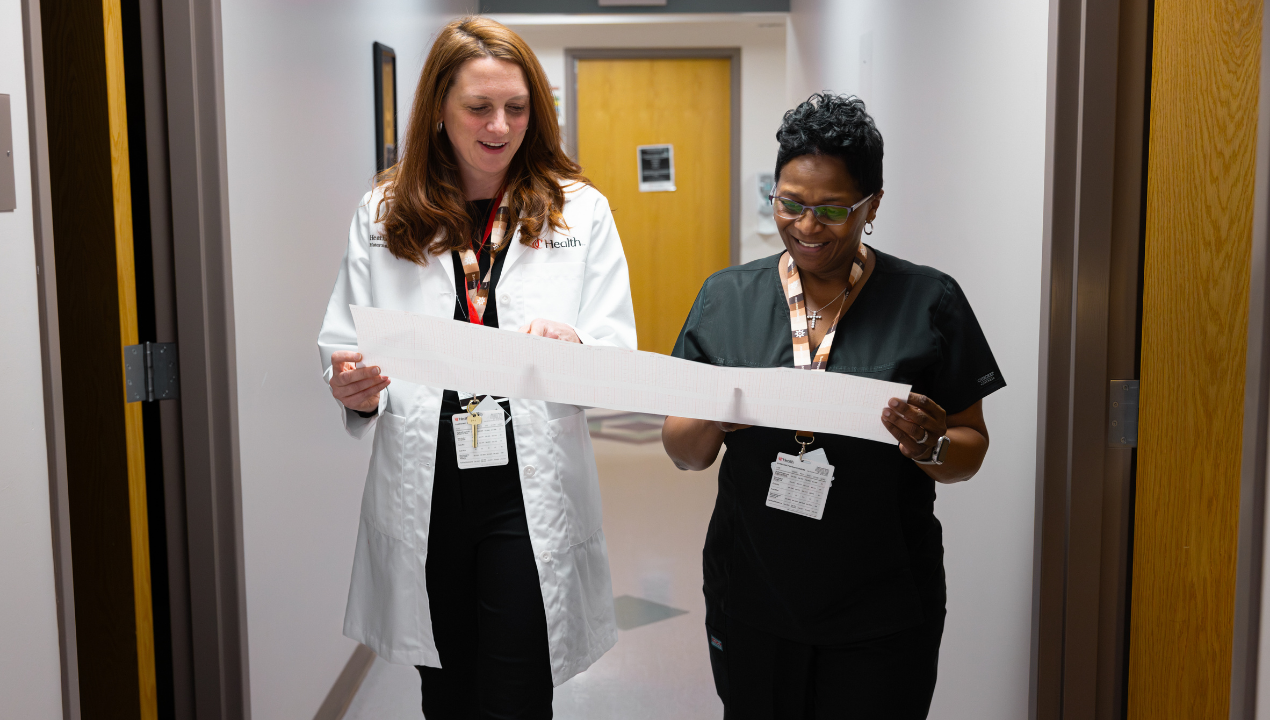
Two UC Health's Women's Pregnancy and Childbirth care team members walk down a hallway while looking at a print out together

Choose UC Health for Pregnancy Care in the Greater Cincinnati Area

At UC Health, care is built around you—from your first visit through postpartum recovery. You have access to:

  • Specialists  working together to manage routine and high-risk pregnancies
  • Coordinated care before, during and after delivery, including postpartum support
  • Advanced treatments and protocols designed to respond quickly when complications arise
  • Community partnerships and programs that support mothers and families beyond the hospital

We focus on clear communication, early intervention and care that takes your concerns seriously.

UC Health’s Pregnancy and Childbirth care providers are here to support you—through recovery and beyond. 

Expert Review:

Evelyn Agbomi, RN
Evelyn Agbomi, RN


Who to Call When You Need Help

You do not need to figure this out alone. If something feels off, start by reaching out.

Call your OB/GYN or postpartum provider first

  • For questions, new symptoms, or anything that doesn’t feel right

Call the hospital’s nurse line

  •  If you were recently discharged or can’t reach your provider

Go to the ER or call 911

  • For severe symptoms like heavy bleeding, chest pain, or trouble breathing

If you’re unsure, call. If it feels urgent, go.

x