PGY1 Residency (West Chester Hospital)

PGY1 Residency (West Chester Hospital)

West Chester Hospital Post Graduate Year One (PGY1) Pharmacy Residency

Program Code: 44048
National Matching Service Code: 215013
Number of positions: 4
Start Date: Mid-June (exact date communicated each year)

As a member of UC Health, West Chester Hospital (WCH) seeks to fulfill our system-wide mission of advancing medicine and improving the health of all people, in addition to creating outstanding patient experiences and offering excellent patient care. With that aim in mind, West Chester Hospital offers an ASHP-accredited PGY1 Pharmacy Residency Program. The PGY1 Residency is a 54–55 week, structured training program designed to develop competence in providing the highest level of pharmaceutical care. The program will be individualized based upon the resident’s level of knowledge, skills, and interests. Elective rotations allow the resident to further pursue interests related to their personal career objectives.

PGY1 Residents will join a robust preceptor team who serve as experts in their area of practice. WCH Department of Pharmacy has Clinical Pharmacy Specialists in Ambulatory Care, Critical Care, Emergency Medicine, Trauma/Surgery, Hematology and Oncology, Infectious Disease/Antimicrobial Stewardship, and Internal Medicine. The PGY1 Resident will be trained in Pharmacy Consult Services including Pharmacokinetic Dosing and Monitoring, Nutrition Support, Anticoagulation, Chronic Obstructive Pulmonary Disease, and Medication Reconciliation. The PGY1 resident will be an integral part of a multidisciplinary team taking care of patients at West Chester Hospital.

The PGY1 residency conducted by West Chester Hospital in West Chester, OH is accredited by ASHP.

Required Learning Experiences (1 month)

  • Drug policy & development
  • Emergency medicine
  • General surgery
  • Infectious diseases
  • Intensive care
  • Internal medicine
  • Orientation (6–7 weeks)
  • Pharmacy administration
  • Research month (December)

Elective Learning Experiences (3 rotations, 1 month each; limited to one offsite elective)

  • Academic medical center critical care*
  • Advanced critical care
  • Ambulatory care
  • Antimicrobial stewardship
  • Cardiology
  • Hematology/Oncology
  • Internal Medicine II
  • Pain Stewardship/HIV/Opioid Use Disorder*
  • Psychiatry**
  • Specialty pharmacy*
  • Transplant*
  • Trauma

*Offsite rotation at UC Health Medical Center (UCMC)
**Offsite rotation at Linder Center of Hope

Required Longitudinal Experiences

Ambulatory Care (Anticoagulation Clinic & Weight Loss Clinic)

  • The longitudinal ambulatory care learning experience is a hybrid of two clinical care areas; the resident will spend roughly 6 months in the anticoagulation clinic and 6 months in the weight loss clinic during the residency year. Assignments are made during orientation, considering resident interests and preferences.
  • Anticoagulation clinic: develop knowledge and problem-solving skills for anticoagulation therapies (warfarin, LMWHs, DOACs) and population-health practices in ambulatory care. One afternoon weekly for six months.
  • Weight loss clinic: pharmacist-led GLP-1 weight-management initiation and longitudinal care. Gain experience in medication access, insurance navigation, and addressing socioeconomic barriers to care. One afternoon weekly for six months.
  • Residents manage medication therapy in both clinics via patient interviews, lab monitoring, dose adjustment, provider consultation and interprofessional collaboration, and patient education.

Medical Emergency Response

  • Master skills for Rapid Response, Code Blue, Trauma Stat, STEMIs, Stroke Alerts, and Emergent Intubations. Approximately 12 weeks of coverage across the year (assigned during orientation) plus weekend staffing coverage.

Medication Use Evaluation (MUE)

  • Perform a MUE over the year; contribute to process improvement; present at committees; support policy implementation and interdisciplinary improvements to the medication-use process.
  • Present MUE results as a poster at the Vizient Pharmacy Network Meeting (typically the day prior to ASHP Midyear) and at a UC Health committee meeting.
  • Follow an established MUE timeline with guidance from 1–2 project preceptors.

Pharmacy Operations

  • Scheduled approximately every other weekend. Shifts rotate between an operational shift (12:00–20:00) and a clinical shift (08:00–16:30).
  • Clinical shift responsibilities include chart review, pharmacokinetic and anticoagulation consult coverage, ED culture result follow-up, and code response. After completing the Intensive Care rotation, residents provide ICU clinical coverage in addition to other duties.

Practice Management

  • Year-long experience including chief resident of the quarter, committee involvement, and drug-information write-ups. The RPD evaluates ability to balance patient care, teaching, and project management as residents grow into clinical pharmacists.

Research

  • Complete a year-long project (with a focused month in December) applying scientific method: design, preparation, performance, and interpretation.
  • Project assigned during orientation with guidance on data collection, statistics, and manuscript preparation. Present research as a platform presentation at the Ohio Pharmacy Resident Conference and a poster at the GCSHP Best Practices Poster Presentation.
  • Follow a defined research timeline with support from project preceptors.

Teaching Certificate

  • Participate in the University of Cincinnati James L. Winkle College of Pharmacy Teaching Certificate (two-day seminar plus longitudinal didactic, co-precepting, and small-group teaching). Academia and preceptor tracks available.
  • Precept one APPE student, lead case/topic discussions, provide anticoagulation education, and offer student mentorship.

Required Presentations

Pharmacy Grand Rounds

  • Two Pharmacy Grand Rounds (30–60 minutes each; ACPE-accredited) attended by UC Health pharmacy staff, residents, and students.
  • PGR 1: topic aligned with longitudinal research project. PGR 2: pharmacotherapeutic topic of resident’s choice.

Morbidity, Mortality, and Improvement Conference (MMI)

  • Present a real-world patient-safety case for facilitated process-improvement discussion and submit a written article for departmental communication and medication-safety continuing education.

Hospital Committee Involvement

The purpose of committee membership and active participation is to foster interdisciplinary and interdepartmental relationships, teach organization and management skills, and introduce residents to hospital structure. Residents participate in two committees (~half year each) as part of practice management.

Examples: Antimicrobial Stewardship Program, Medication Utilization Committee, Clinical Pharmacy Meeting, Pharmacy Staff Meeting.

Salary and Benefits

Final information regarding salary, benefits, and pre-employment requirements will be provided to matched applicants prior to the start of the residency year.

  • Estimated salary of $68,140
  • 28 days paid time off (includes holidays not worked)
  • Medical, dental, vision plans
  • Individual/private workspace in the resident office including a dual-monitor desktop computer, desktop phone, hospital-network mobile phone, printer, refrigerator, Sandford guide
  • Personalized UC Health White Coat
  • Electronic access to the University of Cincinnati Health Sciences Library
  • Weekly ACPE CE via Pharmacy Grand Rounds
  • Financial reimbursement for select professional conferences
  • Advanced Cardiac Life Support certification
  • Free parking adjacent to hospital

Professional Conferences

PGY1 residents present MUE findings at the ASHP Midyear Clinical Meeting/Vizient Pharmacy Network Meeting (December) and research at the Ohio Pharmacy Resident Conference (May) and the Greater Cincinnati Society of Health-System Pharmacists Best Practice Research Symposium (June). Financial support is provided for required conferences.

Program Requirements

Entrance into the PGY1 Pharmacy Residency requires the following:

  • Doctor of Pharmacy degree from an ACPE-accredited College of Pharmacy or Foreign Pharmacy Graduate Equivalency Committee (FPGEC) Certificate from the National Association of Boards of Pharmacy (NABP)
  • The UC Health Department of Pharmacy is able to support some, but not all visa types. For questions about a specific visa type, contact Nicole Harger Dykes, PharmD, BCCCP (Manager, Pharmacy Residency Programs and Professional Development).
  • Pharmacist licensure in the state of Ohio anticipated
  • Ohio pharmacy intern license, if an active Ohio Pharmacist License is not anticipated prior to the start date

Application Process

The following items must be received by January 2 to complete application to the program. Please submit all materials through PhORCAS:

  • Letter of intent
  • Curriculum Vitae
  • College transcripts
  • Three letters of recommendation (PhORCAS format)

Recruitment

West Chester Hospital PGY1 Residency program will recruit at the OSHP Residency Showcase and ASHP Midyear Clinical Meeting Residency Showcase. We will host open houses on site and virtually in November. Additional showcases may be available—please check our Twitter/X account for updates: @UCH_PharmRes.

Program Contact

Tara Harpenau, PharmD, BCIDP
Director, PGY1 Pharmacy Residency Program (will be out August–November 2025, please see below)
Clinical Pharmacy Specialist, Infectious Diseases/Antimicrobial Stewardship
UC Health – West Chester Hospital
Tara.Harpenau@uchealth.com
Office 513-298-8989
Fax (513) 298-7908
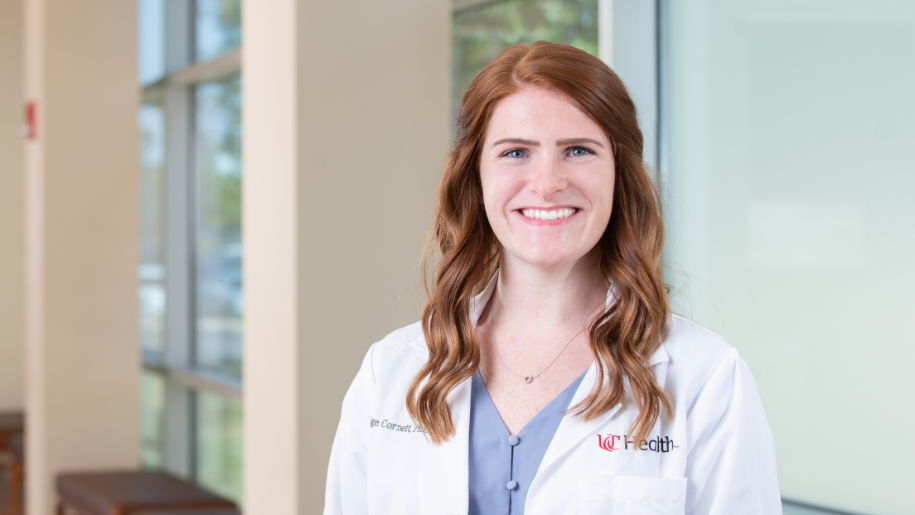
Paige Cornett, PharmD, BCPS
Interim Director, PGY1 Pharmacy Residency Program (August–November 2025)
Clinical Pharmacy Specialist, Internal Medicine
UC Health – West Chester Hospital
Paige.Cornett@uchealth.com
  • Refill a Prescription

    Online at My UC Health or call one of our locations listed below.