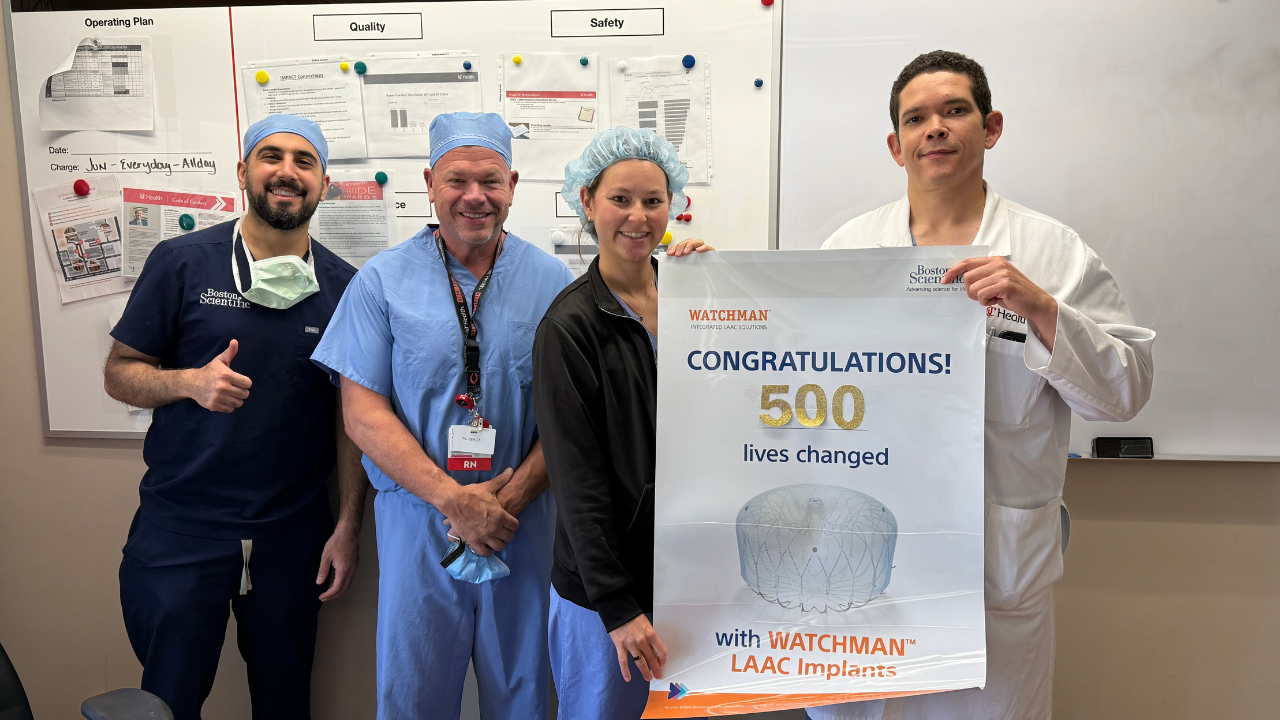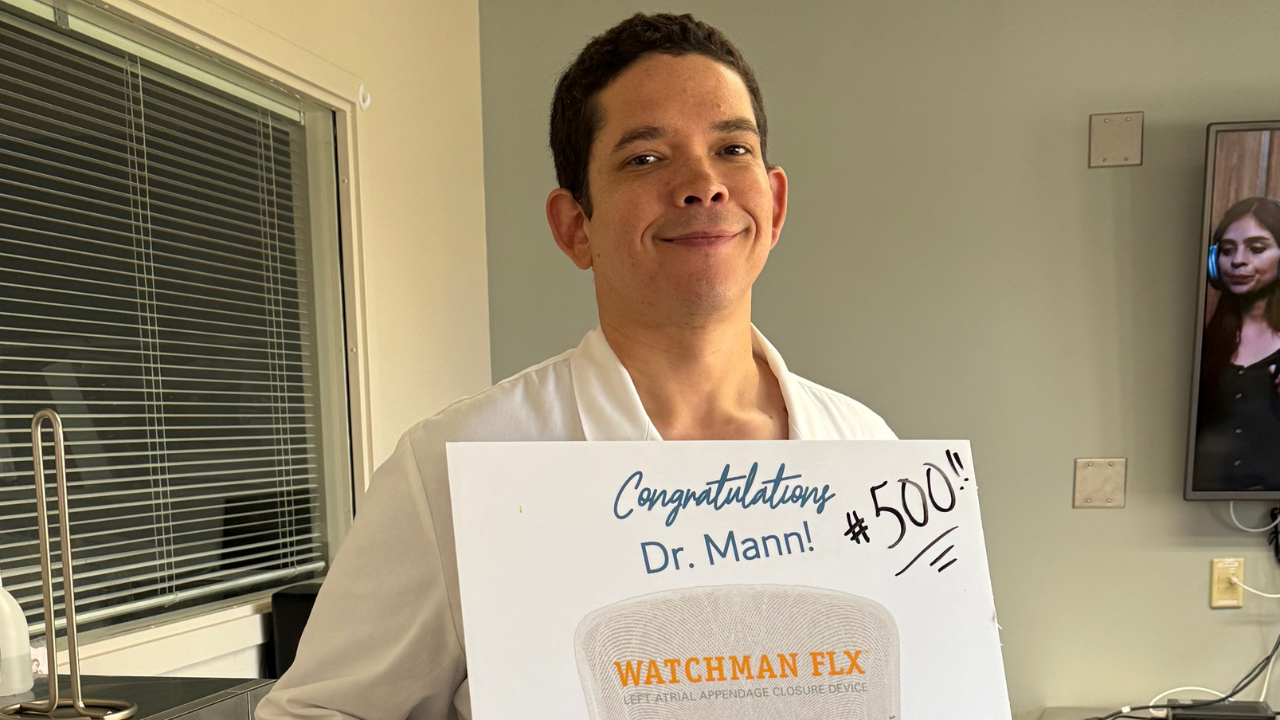
This milestone reflects a committed, team-based approach to AFib care in Greater Cincinnati. Coordinated by Stephanie Byrd, RN, the program has grown about 30% in the last two years, expanding access to the WATCHMAN FLX™ Pro left atrial appendage occlusion (LAAO) device for eligible patients who need an alternative to lifelong blood thinners.
Why This Milestone Matters for Patients
For people with non-valvular atrial fibrillation (AFib), stroke risk is higher. Many manage that risk with blood thinners, but some face bleeding concerns, falls, medication interactions, or simply can’t stay on them long term. The WATCHMAN FLX™ Pro offers another option—closing the left atrial appendage to help keep clots from entering the bloodstream.
Reaching the 500th implant signals depth of experience. It reflects a team that has refined workflows—from evaluation to follow-up—so patients move through care smoothly and with clear communication.
“This is a major milestone for UC Health and our patients. When we celebrate more than 500 Watchman procedures, we celebrate 500 steps toward protecting hearts, preventing strokes, and giving patients more moments that matter,” says Stephanie Byrd, RN, UC Health WATCHMAN Coordinator.
About the WATCHMAN FLX™ Pro
The WATCHMAN FLX™ Pro is a small implant used in a catheter-based procedure to seal the left atrial appendage (LAA)—the place where most clots form in people with non-valvular AFib. By closing this area, the device helps reduce stroke risk and can be an alternative to lifelong blood thinners for the right candidates.
During the procedure, a physician guides a thin tube through a vein in the leg into the heart, positions the device at the LAA opening, and releases it to create a secure seal. Most patients go home the next day and have follow-up imaging to confirm placement.