Patient Stories

From first responder to patient: Austin’s story of lifesaving heart care right in his community

Sep. 30, 2026

When firefighter Austin Phillips suffered a heart attack, he experienced firsthand the power of having expert heart care close by.


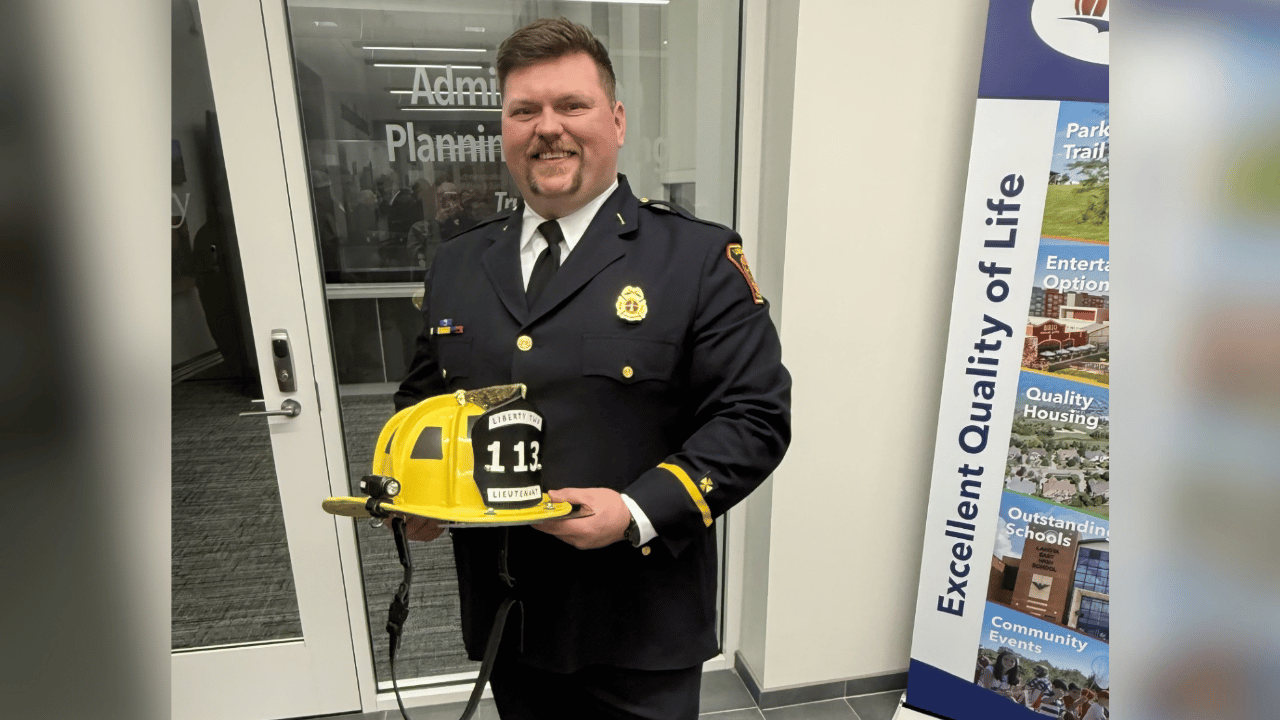
Firefighter Austin smiles in his dress uniform while holding his hat.

As a firefighter and EMS provider in Liberty Township, Austin has spent his career helping others. Then the unexpected happened. “You never think it could happen to you, until it does.”

  • Austin experienced a ST-elevation myocardial infarction (STEMI), a life-threatening heart attack caused by a blocked coronary artery.
  • The team at UC Health West Chester Hospital discovered a 100% blockage in his right coronary artery and immediately placed a stent to restore blood flow to his heart.
  • The seamless coordination of EMS, emergency, cardiac and support teams helped make Austin’s successful outcome possible—and made caring for one of their own especially meaningful.
  • Austin’s experience has changed his perspective on both his own health and his work as a first responder, now knowing what it feels like to be the person who needs help.

As a firefighter and EMS partner in the Liberty Township community, Austin Phillips is used to being the person others call when something goes wrong.

On June 4, the 27-year-old firefighter at Station 113 suddenly found himself on the other side of an emergency.

Austin was at work when he began feeling unwell.

“I was sweating really bad,” he said. “One of the guys I work with was like, ‘You don’t look so good.’”

His coworkers initially wondered if the heat was getting to him. They checked his temperature, but it was normal. So they connected him to an electrocardiogram (EKG) to take a closer look.

The results revealed something much more serious: Austin was experiencing a ST-elevation myocardial infarction (STEMI), a life-threatening heart attack caused by a blocked coronary artery.

His EMS colleagues quickly transported him to UC Health West Chester Hospital, where the cardiology team was ready to act.

Austin went from the hospital doors to the cardiac catheterization laboratory in just 34 minutes—a critical measure known as door-to-balloon, or D2B, time.

Once in the cath lab, the team discovered a 100% blockage in his right coronary artery. They immediately opened the artery and placed a stent to restore blood flow to his heart.

For Austin, the rapid response was especially meaningful. He wasn't just a patient arriving at West Chester Hospital—he was one of the hospital's own EMS partners, a firefighter who works alongside the community's emergency medical system.

His experience became a powerful example of the teamwork between local EMS and the hospital's cardiac team when every minute matters.
‘They kept me in the loop’

Austin was awake throughout the procedure, receiving medication to help him relax while the team worked.

What stands out most to him isn't just how quickly the team acted. It was how they communicated with him during an incredibly frightening experience.

“They were awesome,” Austin said. “They communicated everything with me. They kept me in the loop on what was happening.”

In the midst of an emergency, Austin said the cardiology team continually explained what they were finding and what would happen next.

“I would say the cardiology team did an awesome job of, ‘Hey, here’s what we just found. Here’s what’s going to happen next,’ and kind of laying things out as they were happening and as they were finding them out,” said Austin.

“Austin’s story is a powerful reminder that STEMIs can happen to anyone, even someone who is young, active and otherwise healthy. When a STEMI patient arrives, every member of the team understands the importance of moving quickly while providing reassurance and dignity during an incredibly stressful time,” said Shandi Meadows, BSN, RN, West Chester Hospital Clinical Nurse Manager. 

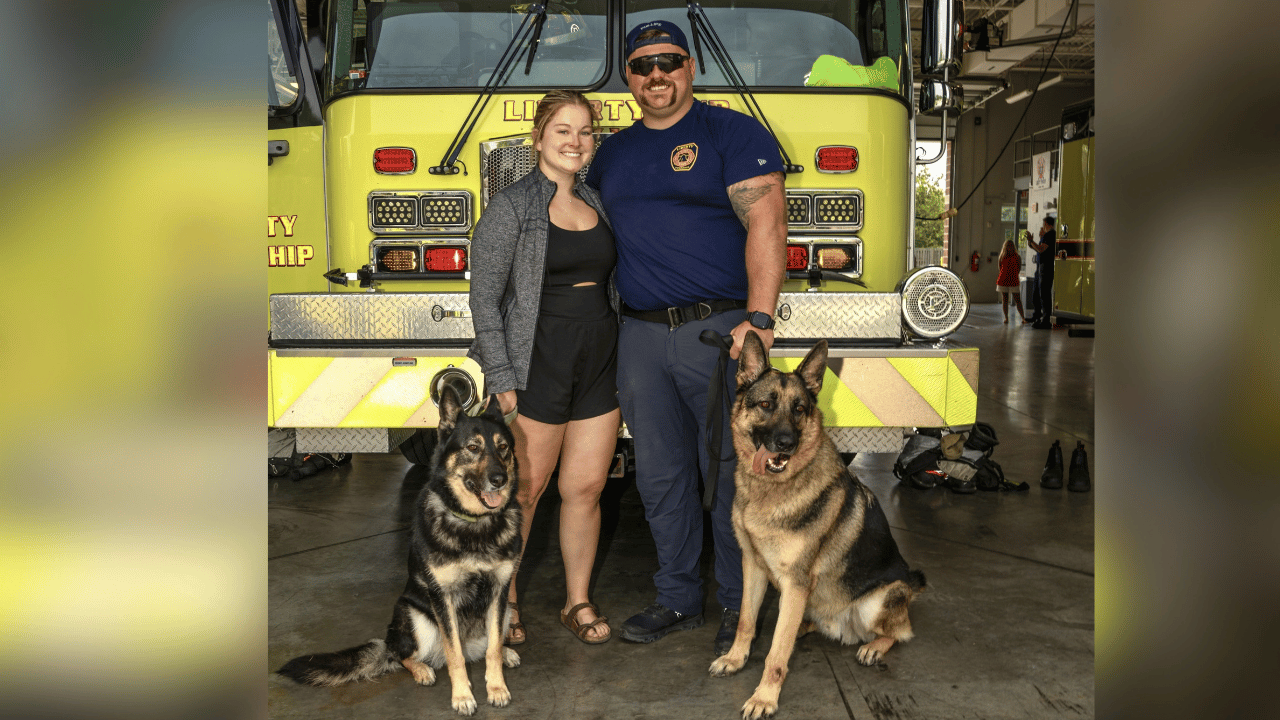
Austin, his fiance, and his two dogs stand together in front of a firetruck at the fire station.

Before his heart attack, Austin was focused on the future, serving his community, planning his wedding and spending time with the people and pets he loves most.

A heart attack at 27

Austin had no reason to expect something like this.

He was a young, active firefighter who considered himself healthy. He was recently engaged and was focused on his career and his future—not heart disease.

“I mean, prior to [this] I was like, ‘Oh, that’s not going to happen to me. I’m 27 years old,’” he said.

His experience has changed that perspective.

“You would never think it could happen, and then it does.”

Austin spent a little more than 24 hours in the intensive care unit before moving to another unit. After just two days in the hospital, he was home.

But leaving the hospital didn't mean the experience was over.

“One of the biggest challenges was kind of just getting over the anxiety of it,” Austin said. “Something like this can happen.”

He began cardiac rehabilitation three days a week, working in a monitored environment to safely rebuild his strength and confidence. His care team has also been adjusting his medications and monitoring his progress before he returns to full duty as a firefighter.

“Austin’s main goal was getting back to work,” said Daven Green, B.S., UC Health Exercise Physiologist. “I tailored his exercise prescription to prepare him for that, focusing on high-intensity intervals and progressively increasing his walking speed and incline. What happened to Austin shows that a heart attack can happen to anyone. It’s important to take care of yourself now to help your future self.”

A different perspective on his job

The experience has also changed how Austin thinks about his work.

As a firefighter, he's accustomed to responding to people during some of the most frightening moments of their lives. Now, having experienced a medical emergency himself, he has a new understanding of what it's like to be the person waiting for help.

“I think now I can better tell somebody, ‘Hey, you’re going to be OK, but we’re going to take good care of you,’” Austin said. “Help them relax and get through it.”

‘Trust your body’

Today, Austin is especially grateful for two things: that he recognized something wasn't right and that the people around him didn't dismiss what they were seeing.

Had he been at home, he says, he might have ignored his symptoms.

“I’m also a 27-year-old guy that doesn’t hesitate to ignore symptoms,” Austin said. “Had I been at home, it would have been a completely different story versus at work where other people were there to also recognize something was not right.”

That's why his message to others is simple: Trust your body.

“You know your body better than anybody, and if something’s not right, don’t be afraid to speak out on it,” Austin said.

He especially wants other young people to understand that age doesn't make someone immune to a cardiac emergency.

“Take care of yourself. You’re not invincible. It could happen to anybody.”

A community that showed up

Austin's recovery has been supported by the same community he serves.

His fiancée and family were by his side throughout his hospitalization. Fellow firefighters from his department made sure he was never alone—even spending nights in the waiting room while he slept.

“I’m super grateful for all the support,” Austin said. “It’s more than I would have ever thought. I never felt like I was alone for the whole process, and I’m thankful for everybody that was a part of it.”

For the West Chester Hospital team, caring for Austin was also a reminder of the relationships that extend beyond the hospital walls.

As a Liberty Township firefighter and EMS partner, Austin is part of the emergency response network that works with West Chester Hospital every day to care for patients across the community.

“The coordination between EMS, the emergency department, the Cath Lab, physicians, nurses, technologists and support staff was a true reflection of the strength of our system. Seeing that process come together for one of our own EMS partners made the successful outcome that much more meaningful,” said Shandi Meadows, BSN, RN.

Austin is now focused on his recovery, completing cardiac rehabilitation three days a week and preparing to return to the job he loves.

And his message is one he hopes others will remember long before they ever need a cardiac team:

“You know your body better than anybody, and if something’s not right, don’t be afraid to speak out on it.”

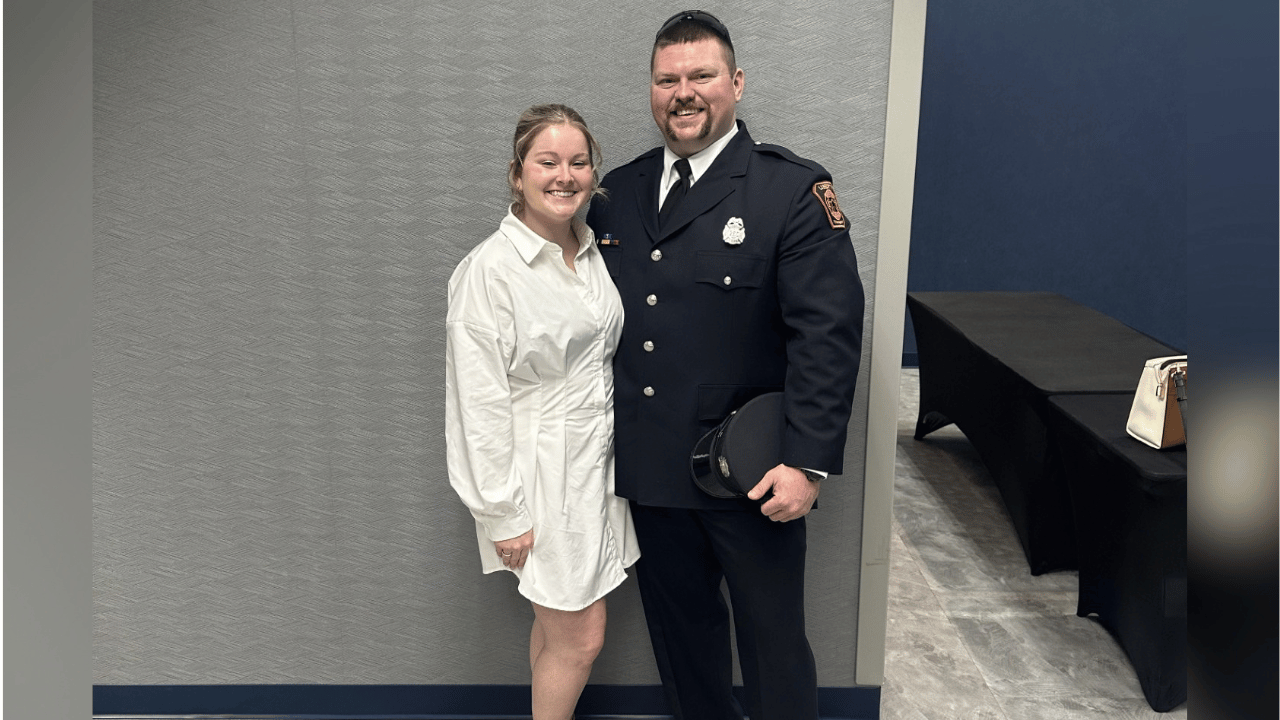
Austin and his fiance pose for a photo together.

One of Austin's greatest sources of strength came from the people who stood beside him through every step of his recovery.

Why UC Health for Heart Care

When every minute matters, patients across West Chester and Greater Cincinnati have access to expert heart care close to home. Austin's story highlights the seamless coordination that supports patients from emergency treatment through recovery.

  • Fast treatment: Austin's artery was opened just 34 minutes after arriving at West Chester Hospital, well below the national 90-minute benchmark for STEMI care.
  • Coordinated expertise: EMS, emergency, cath lab, nursing and cardiac teams work together to deliver rapid, lifesaving care.
  • Support beyond the hospital: Advanced heart failure care, cardiovascular ICU services and cardiac rehabilitation help patients recover and stay healthy.

At UC Health, we live for pushing forward heart care, taking on the most common conditions to the most rare. For cardiology care, call 513-475-8521.

Featured Providers:

Shandi Meadows, BSN, RN, Clinical Nurse Manager

Daven Green, B.S., Exercise Physiologist 

Back to top
x