Patient Stories

Every Moment Matters: How UC Health Gave Brian a Second Chance at Life

Dec. 4, 2025

Sometimes life changes without warning. Brian Hopton’s story shows how sudden cardiac arrest turn a healthy, active life upside down—and how expert, coordinated cardiac care at UC Health can bring someone back.


  • A heart attack leading to sudden cardiac arrest at home left Brian without oxygen for nearly 18 minutes, prompting a lifesaving response from EMS.
  • Advanced, coordinated care at UC Health — from emergency medicine to cardiology specialists — stabilized him and guided him through a critical recovery.
  • A renewed outlook on life emerged as Brian embraced rehabilitation, faith, and gratitude for every moment he now gets to share with his family.

If you or someone you love needs heart care, choose the team trusted by families across Greater Cincinnati. Contact UC Health’s Heart & Vascular Care team at 513-475-8521.

A Holiday Weekend Turns Life-Threatening

At 52, Brian Hopton describes himself with a grin: “I act like I’m 25.” A longtime salesman, husband, father, and avid golfer, Brian lived life at a fast pace—never imagining his world would stop in an instant on Labor Day.

That weekend began like so many others. Brian and his wife spent time with friends, playing golf, cooking out, and watching fireworks on TV. But by Monday morning, everything changed.

“I woke up at 7:45, looked at my phone. Next thing you know, it was four days later, and I woke up in UC Medical Center in Clifton,” Brian recalls. “My family, and close friends—they were all there. I asked, ‘What are y’all doing here?’ They said, ‘Dad, you had a heart attack and almost passed away several times.

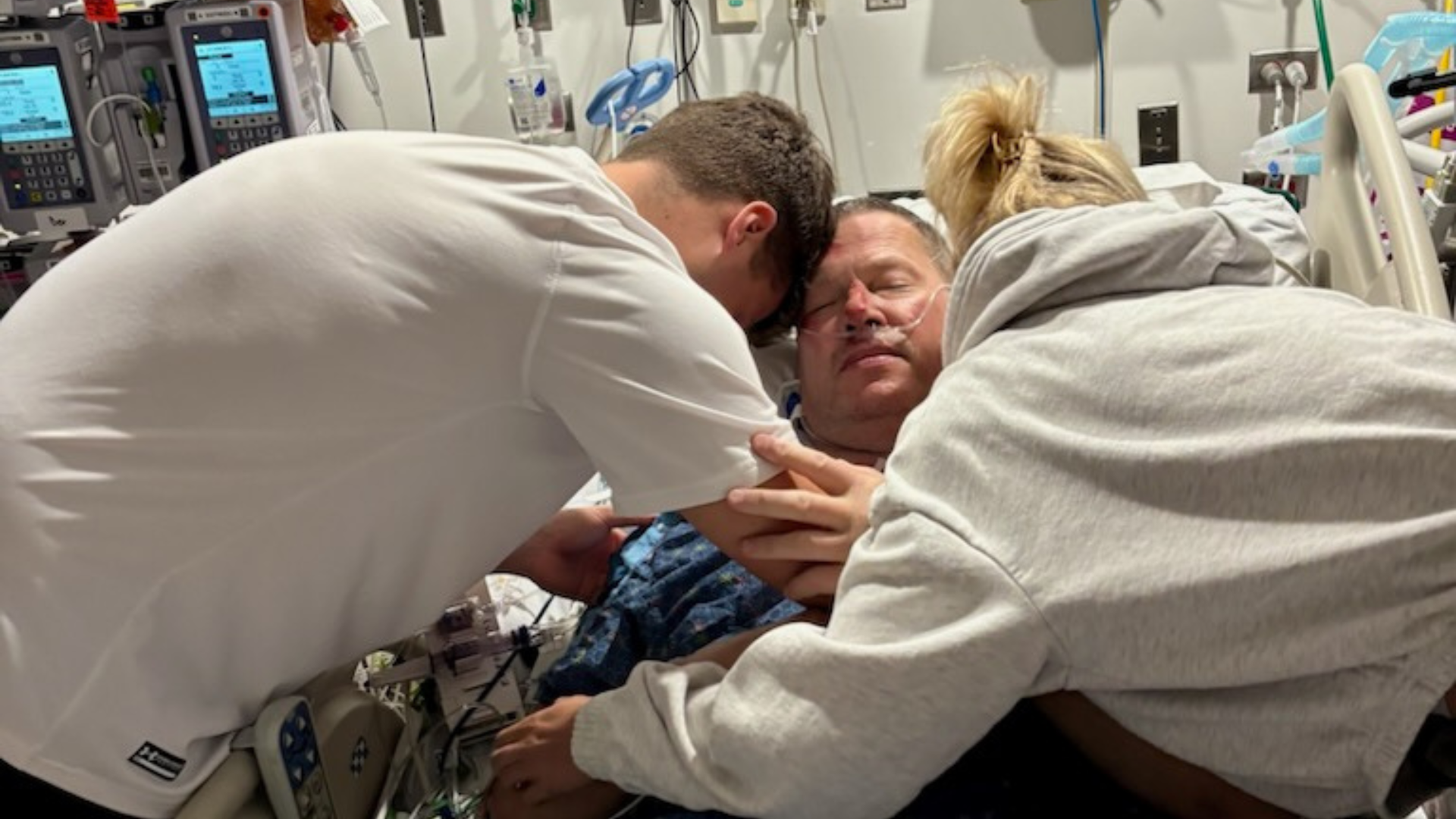
Photo of Brian Hopton in the hospital. Photo provided by Brian Hopton.

A Life Lost—and Revived

Brian had suffered sudden cardiac arrest at home. His wife immediately called 911, and first responders arrived within minutes.

Brian was told he was without oxygen for up to 18 minutes. “By that time, I was blue and dead. The wonderful Deerfield Twp EMT’s Station 56 finally got a pulse in my bedroom, but I flatlined multiple times in the ambulance. They had to get the Stryker Lucas 3, a chest compression system out, which again saved my life,” Brian says.

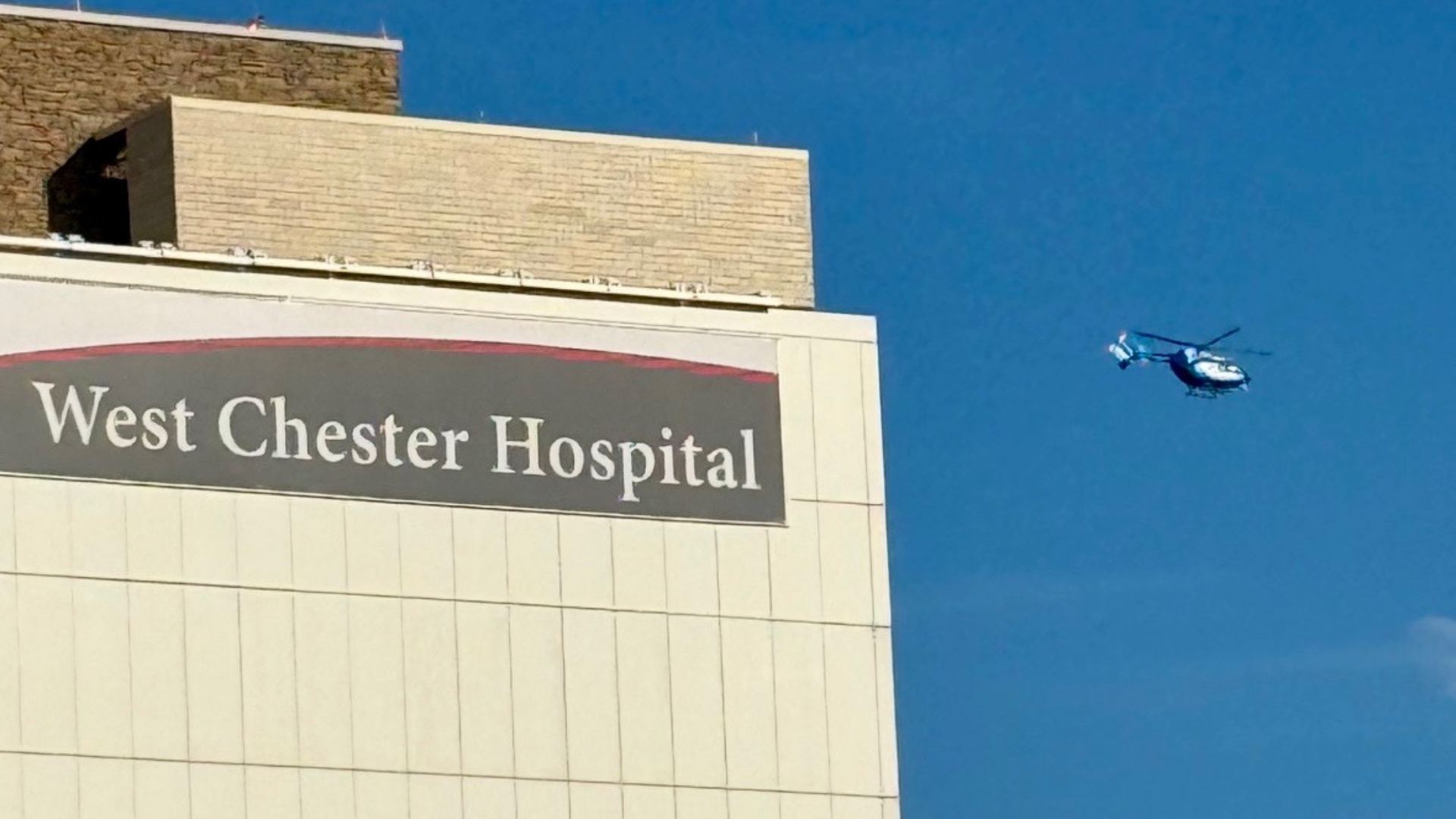
For his wife and family, those moments were terrifying. For Brian, they are now a blur filled in only by what others have told him: collapsing on the floor, paramedics fighting to revive him, the decision to airlift him from West Chester Hospital to UC Medical Center for advanced cardiac care.

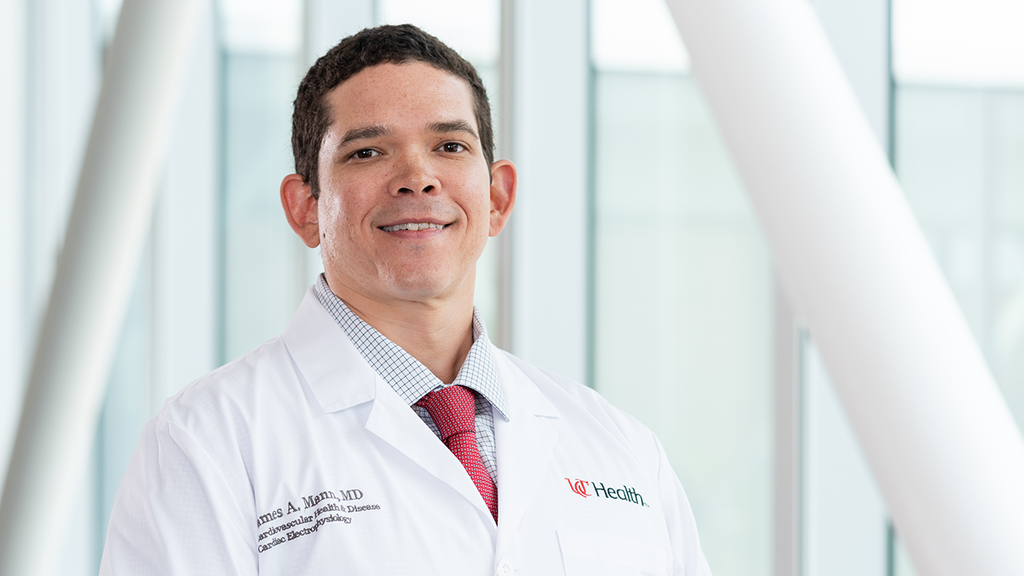
At the hospital, his care team, led by cardiologists Dr. Naseer Khan and Dr. James Mann, acted quickly to stabilize him. Their interventions, along with the coordinated efforts of UC Health’s emergency medicine, intensive care, and cardiology teams, gave Brian the second chance he never expected.

“When a patient arrives after cardiac arrest, every second truly counts. Our team immediately focuses on restoring blood flow to the heart and protecting the brain from further injury. In Brian’s case, rapid coordination between EMS, our emergency department, and the cath lab was absolutely critical,” said Dr. Mann.

“God provided me another life,” Brian says quietly. “I could be dead, obviously. But I was saved at least three or four times—at the house, in the ambulance, at West Chester, and then again at UCMC.”
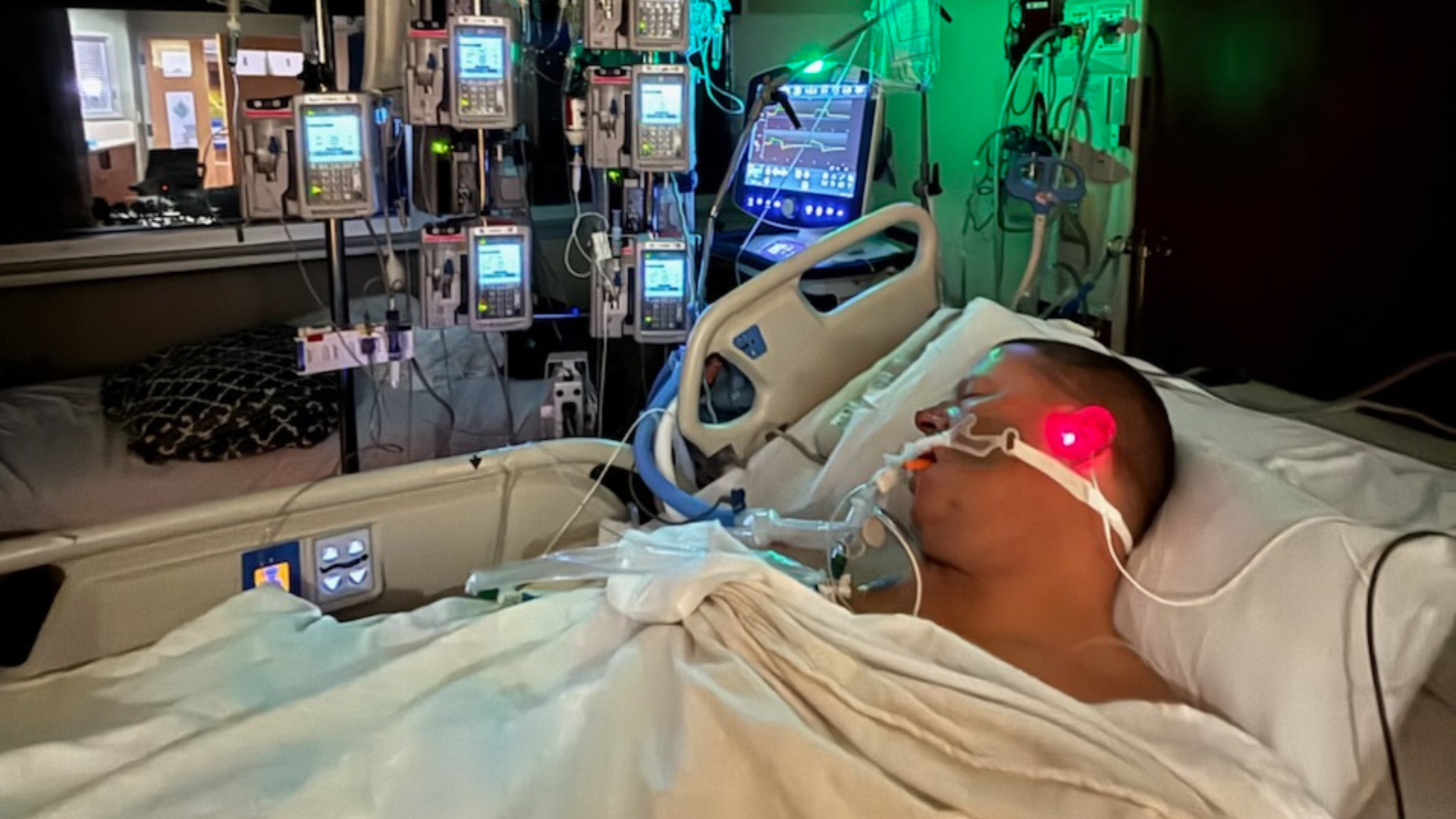
Brian was transported from West Chester Hospital to UCMC. Photo provided by Brian Hopton.

Consistent Care Across Every Floor

Brian doesn’t remember much about the earliest days of his hospitalization, especially in the ICU. But as he progressed through his recovery at UC Health, moving from intensive care to step-down units and eventually to general rooms, he noticed something remarkable: the consistency of his care.

“I’d say the thing that stood out the most was consistency,” Brian explains. “I think I was in a total of three different rooms. From the night shift nurses checking sugar levels every hour, to the day nurses helping my wife, every single person was transparent, open, and just awesome.”

He remembers how the staff not only cared for him but also went out of their way to support his wife, who stayed by his side for 11 nights straight.

“My wife was sleeping on that little pull-out seat the first few nights,” Brian says. “Then one of the nurses was like, ‘Oh my gosh, I’ve got to get you a better bed.’ She didn’t have to do that, but she did. That’s just how it was across the board; everyone cared.”

Brian and his family experienced the depth of UC Health’s system—from West Chester Hospital to the main UC Medical Center campus and specialty clinics. No matter where they were, the Hopton family felt the same level of compassion and professionalism.

“From Clifton to West Chester, from therapy to surgery, we’ve been at more or less all the UC Health locations,” Brian says. “And across the board, we’ve never had a bad feeling. The consistency from every department has been incredible.”

Brian hugging his children in the hospital. Photo provided by Brian Hopton.

A Changed Perspective

The experience has profoundly shifted how Brian views life.

“God’s touched me, and it’s like, ‘Alright, now what do you want me to do?’” he says. “For me, it’s about slowing down, appreciating life, and being kind. We have enough evil in the world. If I can make someone smile or laugh in a day, I’ve done my job.”

Brian now finds himself practicing meditation, reading scripture more often, and cherishing the smallest moments with his family.

“When my wife asked to take a selfie on Labor Day, I almost said no,” he remembers. “But thank God I did, because that could have been our last picture together. It’s about enjoying the simplest things, like waking up tomorrow, because you never know.”

His advice to others is straightforward: don’t ignore the signs, even when they seem small.

“I had no symptoms—no shortness of breath, no tingling in my arm. I played golf all weekend and then just collapsed,” Brian says. “But if something feels off, don’t ignore it. Take care of yourself!”

“Heart disease doesn’t always come with warning signs. That’s why awareness and prevention are so important. If you experience unusual fatigue, chest discomfort, or anything that feels off, get checked right away. It could save your life,” explained Dr. Mann. 

The Road Ahead

Brian is beginning cardiac rehabilitation at UC Health’s West Chester location, and while the process of recovery continues, he says he already feels humbled and deeply thankful.

“For my family, it was a roller coaster. First, they’re told I had a pulse, then they’re worried about oxygen loss, then whether I’d be functional,” Brian says. “I have learned the number one killer in the U.S. is heart disease, responsible for over 680,000 deaths annually. It could have been worse, but God and UC Health gave me another chance.”

With his family by his side, Brian is choosing to live differently now; slower, with more appreciation, and with gratitude for every caregiver—from paramedics to cardiologists Dr. Mann and Dr. Khan—who played a role in saving his life.

“I’ve been humbled,” Brian says. “And just the appreciation of life, of people, of every moment, I don’t take any of it for granted anymore.”

You Can’t Plan a Heart Crisis—You Can Rely on Us

When every second counts, experience matters. UC Health cardiologists—like the experts who cared for Brian—deliver the region’s most advanced, coordinated care for heart attacks, cardiac arrest, and complex heart disease.

If you or someone you know is in need of heart care, please contact UC Health’s Heart & Vascular Care team at 513-475-8521.

Featured Providers:

Heart Care
Practices: Cardiovascular Disease
Heart Care
Practices: Cardiovascular Disease

Heart Statistics:

  • Heart Disease is the #1 killer of Americans
  • Out of hospital cardiac arrest survival rate is ~7-10.5%
  • If the heart attack leads to sudden cardiac arrest and is unwitnessed, survival drops to ~4.5%
  • Survival after 15 minutes without oxygen is less than 5%
  • Bystander CPR received in the first two minutes after suffering SCA have an 81% greater chance of surviving and a 95% higher chance of surviving without significant brain damage, compared to people who received no bystander CPR.
x