Wellness

Chemical burn prevention: How to stay safe around hazardous chemicals

Oct. 6, 2026

Chemical burns can happen in seconds, and the damage may continue even after someone is no longer in contact with the chemical.


Smudges of Toxic Industrial Liquid Chemical Pollutant Visible on Surface of Rain Water Puddles on Muddy Ground Road

From pool chemicals and household cleaners to industrial products and agricultural chemicals, many substances we use at home or work can cause serious injuries if they come into contact with our skin, eyes or clothing. Knowing how to safely store, handle and transport chemicals can help prevent serious burns and other injuries.

For people who work with hazardous chemicals regularly, understanding what to do after an exposure is just as important.


What causes chemical burns?

Chemical burns occur when corrosive substances and irritants damage our body's tissues. Unlike thermal burns caused by heat or flames, chemical injuries can continue causing tissue damage until the offending substance is removed.

Common sources of chemical exposure include:

  • Pool and spa chemicals
  • Household cleaning products
  • Industrial chemicals and solvents
  • Acids and alkalis
  • Agricultural and lawn-care products
  • Laboratory chemicals
  • Automotive and other maintenance products

Chemical exposures can happen through spills, splashes, leaks, improper mixing or contact with contaminated clothing or equipment.

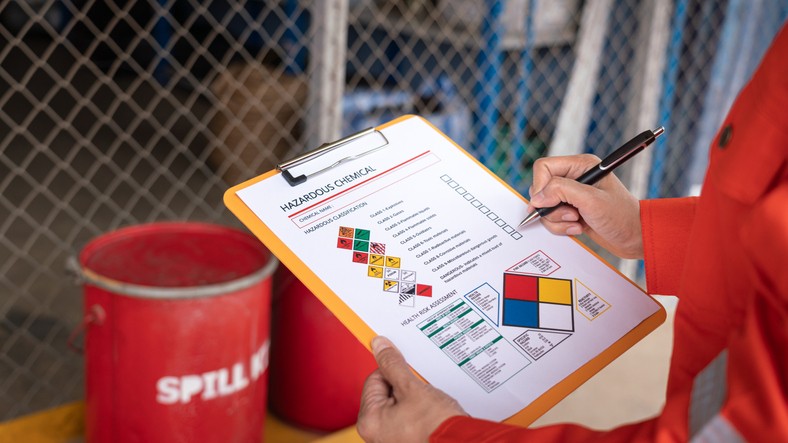
Safety officer checking chemical hazard material form for correct the oil spill kit which is placed at front of chemical storage warehouse area in factory.

How to prevent chemical burns

Store chemicals safely

Keep chemicals in their original, clearly labeled containers and follow the manufacturer's storage instructions.

  • Store chemicals away from children and pets.
  • Keep incompatible chemicals separated.
  • Make sure containers are tightly closed when not in use.
  • Store chemicals in a cool, well-ventilated area when required by the product label.
  • Never store chemicals in food or beverage containers.
  • Keep Safety Data Sheets (SDS) available for chemicals used at work.

Never mix chemicals unless instructed

Some chemicals can react dangerously when combined, potentially creating heat, fire or toxic gases.

Never mix pool chemicals or cleaning products unless the product label or manufacturer specifically says it is safe to do so.

If you're unsure whether two products can be used together, don't mix them.

Use the right protective equipment

Protective equipment can help prevent chemicals from reaching your skin and eyes.

Depending on the product and task, this may include:

  • Chemical-resistant gloves
  • Safety goggles
  • Face shields
  • Protective clothing or aprons
  • Appropriate footwear

Always follow the product label, Safety Data Sheet (SDS) and workplace safety requirements to determine what protection is appropriate. Wearing gloves alone may not provide enough protection for a chemical that can splash onto your face, eyes or clothing.

Be especially careful with pool chemicals

Pool chemicals can be useful for maintaining safe water, but they can also cause serious injuries when they are improperly stored, handled or transported.

When working with pool chemicals:

  • Read the label before using a product.
  • Follow the manufacturer's instructions for storage and handling.
  • Keep chemicals away from heat, flames and other potential ignition sources when required by the product.
  • Keep different chemicals separated as directed.
  • Wear the recommended protective equipment.
  • Never mix chemicals unless specifically instructed.
  • Make sure containers are properly secured when transporting chemicals.
  • Do not transport chemicals in a way that allows containers to tip, leak or come into contact with incompatible substances.

If you work with pool chemicals as part of your job, make sure you know your workplace's emergency procedures before an accident happens.

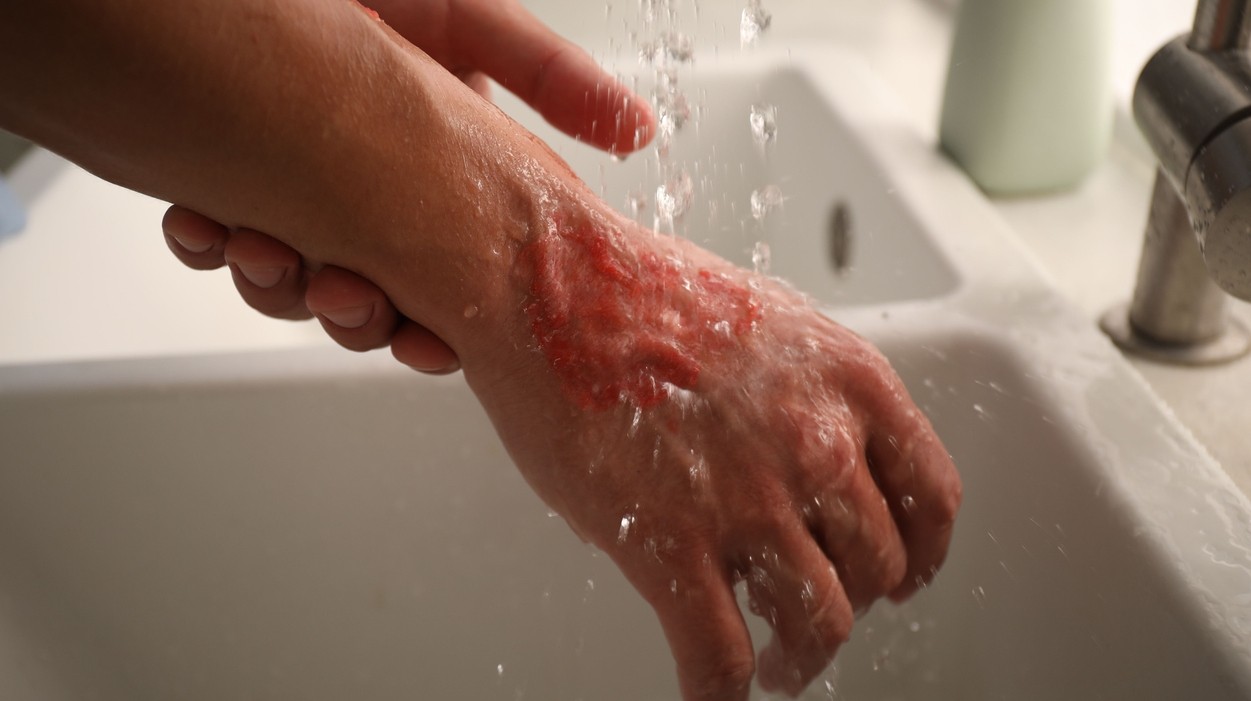
Person rinsing chemicals off a hand burn.

What to do after a chemical exposure

If a chemical gets on your skin, in your eyes or on your clothing, act quickly.

1. Get away from the chemical

Move away from the source of the exposure and into fresh air if it is safe to do so. Follow instructions from emergency personnel if there is a larger chemical release.

2. Remove contaminated clothing

If chemicals have gotten onto your clothing, carefully remove the contaminated clothing as soon as possible.

Avoid spreading the chemical to other parts of your body. If clothing needs to be pulled over your head, cut it off rather than pulling contaminated material across your face when possible.

3. Rinse your skin

Once away from the source, get the chemical off your skin as quickly as possible.

According to Dr. Uzair Qazi, MD, rinsing with enough water is important. “Dilution is the solution to pollution,” says Dr. Qazi.


“Chemical injuries can continue to damage tissue as long as the substance remains in contact with the skin.” Uzair Qazi, MD, FACS Hand, Plastic & Burn Surgeon, UC Health Burn Center

The severity of the burn may not be immediately apparent right away, so don’t wait to see how bad it looks. Shower or flush the affected area immediately with water. Do not scrub the skin, which can potentially spread or further irritate the chemical exposure.

The Centers for Disease Control and Prevention recommends getting the chemical off your body as soon as possible and, when able, showering within the first 10 minutes after exposure.

Do not try to neutralize a chemical on your skin by applying another chemical. Follow the product's emergency instructions and seek medical guidance.


4. Flush your eyes

If a chemical gets into your eyes, immediately begin flushing them with water.

Remove contact lenses if possible and continue rinsing. The CDC recommends flushing the eyes for 10 to 15 minutes if they are burning or vision is affected.

Seek medical attention promptly for an eye exposure.

5. Get medical help

Chemical burns can be serious even when the injury doesn't initially look severe.


Call 911 for a life-threatening emergency, including difficulty breathing, severe burns, loss of consciousness or other serious symptoms.

You can also call the Poison Control Center at 1-800-222-1222 for guidance after a chemical exposure. If the chemical cannot be removed, symptoms develop or the exposure is significant, seek emergency medical care.

If possible, have the product container or label available for medical professionals. Do not delay emergency care to find the product information.

Medic 46 in the UCMC Emergency bay.

When should you seek emergency care for a chemical burn?

Seek immediate medical attention after a chemical exposure, particularly if:

The burn involves the face, eyes, hands, feet, neck, groin or major joints.

  • The burn appears deep or extensive.
  • The person has difficulty breathing.
  • The chemical was inhaled.
  • The chemical was swallowed.
  • There is significant pain, swelling or skin damage.
  • The chemical cannot be completely removed.
  • The exposure involved an industrial, agricultural or unknown chemical.
  • The person develops confusion, dizziness or other concerning symptoms.

UC Health recommends emergency care for burns resulting from chemical exposure.

“With chemical burns, time is tissue. Prompt decontamination and treatment can mean the difference between a life-changing injury and a good functional recovery.” Uzair Qazi, MD, FACS Hand, Plastic & Burn Surgeon, UC Health Burn Center

Chemical burn prevention starts with preparation

You can't always predict when an accident will happen. But you can prepare for one.

Know which chemicals you are working with, read their labels, use the appropriate protective equipment and understand what to do if an exposure occurs. At home or at work, make sure everyone who handles chemicals knows where emergency showers, eyewash stations, first-aid supplies and emergency contact information are located.

And remember: if a chemical exposure happens, getting the chemical off your body and getting help quickly matters.

UC Health Burn Center care team collaborating in the Center's hallway.

Expert burn care when you need it

Even with careful preparation, serious burn injuries can happen. The UC Medical Center Adult Burn Center has more than six decades of experience caring for patients with complex burn injuries and is the region's only adult burn center. Its multidisciplinary team provides specialized care from emergency treatment through surgery, rehabilitation and long-term recovery.

The Burn Center is verified by the American Burn Association, which evaluates burn centers based on standards for patient care, staffing, facilities, education, research and performance improvement.

If you or someone you know has experienced a serious chemical or other burn injury, call 513-584-BURN (2876). The dedicated hotline connects you with the UC Health Burn Center team, which can help determine next steps and coordinate care when needed.

x