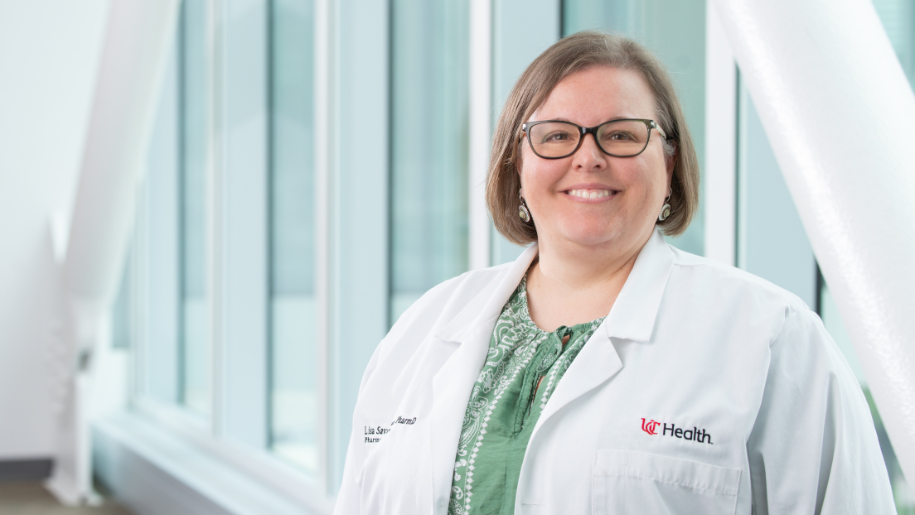
The following outline represents general program design and requirements for the ASHP-accredited PGY2 Oncology Pharmacy Residency at the University of Cincinnati Medical Center. The program includes a variety of direct and non-direct patient care, research, and teaching opportunities and will be tailored to the needs of each resident based on an individual development plan.
Program requirements
Entrance into the PGY2 Oncology Pharmacy Residency requires the following:
- Doctor of Pharmacy degree from an ACPE-accredited College of Pharmacy
- Completion of an ASHP-accredited PGY1 Pharmacy Residency
- Pharmacist licensure in the state of Ohio
- The UC Health Department of Pharmacy is able to support some, but not all visa types. For questions about a specific visa type, contact
Nicole Harger Dykes, PharmD, BCCCP
(Manager, Pharmacy Residency Programs and Professional Development).
A residency certificate will be awarded upon completion of all established program requirements, including achievement of Required Competency Areas, Goals, and Objectives for PGY2 Oncology Pharmacy Residency.
Clinical learning experiences
Required
- Orientation (4 weeks)
- Inpatient Hematology and Bone Marrow Transplant I (4 weeks)
- Inpatient Hematology and Bone Marrow Trnasplant II (4 weeks)
- Pain and Palliative Care (4 weeks)
- Ambulatory Leukemia and HSCT (3-4 weeks)
- Ambulatory Lymphoma and Myeloma (3-4 weeks)
- Ambulatory GI Malignancies and Sarcoma (3–4 weeks)
- Ambulatory Thoracic Malignancies and Melanoma (3–4 weeks)
- Ambulatory GU Malignancies (3-4 weeks)
- Ambulatory Breast and Gynecologic Malignancies (3–4 weeks)
- Oncology Clinical Research/Cancer Drug Development (3-4 weeks)
Elective
- Inpatient Hematology/Oncology Consult Service (2–4 weeks)
- Nutrition (2–4 weeks)
- Solid Organ Transplant (2–4 weeks)
- Transplant Infectious Diseases (2–4 weeks)
- Ambulatory Hematology and Bone Marrow Transplant II (2–4 weeks)
- Advanced Ambulatory Hematology/Oncology Block (2–4 weeks)
- Specialty Pharmacy (2-4 weeks)
Clinical required longitudinal experiences
- Pharmacy practice requirements (clinical weekend staffing); every 3 weeks for approximately 16 weekends, plus one major and minor holiday (52 weeks)
- Longitudinal Clinic - Benign Hematology (UCMC) (18-20 weeks)
- Longitudinal Clinic - NeuroOncology (18-20 weeks)
Longitudinal clinic experiences in the fall start after orientation and end prior to December holidays. Spring longitudinal clinic experiences will begin following January research weeks. Schedules may be adjusted for conferences, time off and clinic staff availability.
Non-Clinical required longitudinal experiences
- Research (4 dedicated weeks, distributed throughout the year, plus longitudinal check-ins) (52 weeks)
- Administration (52 weeks). Includes:
- Medication Use Evaluation
- Formulary evaluation (or development of a treatment guideline, policy, or protocol)
- Chemo, Biologics and Infusion Subcommittee participation
- Administration topics
- Teaching Longitudinal; didactic lecture or case facilitation at College of Pharmacy (8-12 weeks)
- Complex Case Conference (Every 4 weeks over 48 weeks)
- Pharmacy Grand Rounds (Twice annually, 0.5 hour presentations; each LE duration is 4 weeks)
- Morbidity, Mortality & Process Improvement Case Conference (One annually, 20-30 minute guided discussion - total LE duration: 8-12 weeks)
Research
Each PGY2 Oncology resident will complete a longitudinal research project originating from resident interest or preceptor submissions. The timeline below helps keep work on schedule.
Research Timeline
Month(s) |
Milestone |
June/July |
|
August |
|
September |
|
October |
|
December/January |
|
January/February |
|
March/April |
|
April–June |
|
June |
|
Education opportunities
Residents may participate in the University of Cincinnati James L. Winkle College of Pharmacy Teaching Certificate Program (if not completed as a PGY1). The program includes a two-day seminar with longitudinal didactic, co-precepting, and small-group teaching. Residents also deliver a didactic lecture and/or case facilitation in the oncology therapeutics module.
Education of pharmacists and other healthcare professionals is integrated longitudinally, including inter-professional grand rounds, resident-led clinical presentations, nursing education, and other opportunities.
Pharmacy Grand Rounds
Two ACPE continuing education presentations, totaling 1 hour:
- Fall: one individual 30-minute presentation
- Winter–Spring: either a second individual 30-minute presentation or a 30-minute therapeutic controversy with a co-resident (each presents 30 minutes; 60 minutes total)
Pharmacy Morbidity, Mortality, and Process Improvement
Each resident presents one pharmacy-specific process improvement opportunity at the monthly Pharmacy MMPI case conference. With a primary preceptor, DPD contact, and process improvement coach, the resident identifies a workflow and/or safety issue and applies process improvement methodology to propose solutions. Deliverables include a 20-minute presentation and a written summary for ACPE medication safety CE for pharmacists and pharmacy technicians.
Medication use evaluation (MUE)
Each resident conducts an MUE coordinated through an assigned committee, typically completed in the second half of the year, but residents may expedite their timeline as it aligns with their goals. Results are presented to the Chemotherapy, Biologics and Infusion Subcommittee of Drug Policy Development, or another relevant committee.
Committee involvement
Each resident serves as an active member of the Chemotherapy, Biologics and Infusion Subcommittee, participates in monthly planning meetings, and leads at least one meeting in the second half of the year. Residents regularly present new drug updates, formulary evaluations, policy or Standard Operating Procedure updates, and MUEs.
Independent practice
Residents assist with rapid responses and Code Blue for their services while inpatient and respond to oncology infusion areas while on ambulatory rotations (in addition to the rapid response team). Residents do not participate in the departmental on-call program but serve as a late shift resource one evening per week (on-site 4:00–6:00 p.m.; remainder from home for urgent heme/onc issues). Weekend clinical coverage to oncology and solid organ transplant occurs approximately every 3 weeks for 16 weeks. Each resident covers one major holiday (Thanksgiving, Christmas, or New Year’s Day) and one minor holiday (Labor Day, Martin Luther King, Jr. Day, Memorial Day, Juneteenth.)
Professional conferences
Required: Great Lakes Pharmacy Resident Conference (April/May).
Expected: HOPA Annual Meeting (late March/early April), unless otherwise determined by the program director. Alternative experiences may be arranged for extenuating circumstances.
Vizient/ASHP Midyear attendance/presentation is optional; however, residents serving as chief resident are required to attend ASHP Midyear (December). If residents attend ASHP Midyear, they will be held to the same expectations/requirements of other residents (i.e. Vizient poster presentation, attend residency showcase booth, etc.)
Salary and benefits
Final information on salary, benefits, and pre-employment requirements will be provided to matched applicants before the residency year begins.
- Estimated salary of $70,000–$72,000
- 28 days paid time off (includes holidays and sick leave)
- Medical, dental, and vision plans
- Individual workspace with desktop computer, dual monitors, and laser printer
- Physical and electronic access to the University of Cincinnati Health Sciences Library (adjacent to hospital)
- Weekly ACPE provided through Pharmacy Grand Rounds
- Financial reimbursement for professional conferences, as available
- Advanced Cardiac Life Support certification
- Free covered parking adjacent to hospital
UCMC PGY2 Oncology Residents: Accepted Positions after PGY2 (Previous 5 Years)
- 2025: Brooke Butler, PharmD; Clinical Pharmacy Specialist, Hematology/Oncology, Grady Health System, Atlanta, GA
- 2025: Christopher Cornett II, PharmD; Clinical Pharmacy Specialist, Hematology/Oncology, Baptist Health, Louisville, KY
- 2024: Ellie Nazzoli, PharmD; Clinical Pharmacy Specialist, Oncology, John Cochran VA Medical Center, St. Louis, MO
- 2024: Rachel Milholland, PharmD; Clinical Pharmacy Specialist, Hematology/Oncology/BMT, University of Cincinnati Medical Center, Cincinnati, OH
- 2023: Abigail Hart, PharmD, MBA; Clinical Pharmacy Specialist, Hematology/Oncology/BMT, University of Cincinnati Medical Center, Cincinnati, OH
- 2023: Aaron Swomley, PharmD, PhD; Clinical Pharmacist, Huntsman Cancer Institute, University of Utah Health, Salt Lake City, UT
- 2022: Alisha Vora, PharmD; Outpatient Hematology/Oncology Clinic Float Pharmacist, UNC Health, Chapel Hill, NC
- 2021: Sydney (Allen) Elmore, PharmD; Clinical Pharmacist, Oncology, West Chester Hospital, West Chester, OH
- 2020: Brooke Peters, PharmD; Clinical Pharmacy Specialist, Hematology/Oncology, University of Cincinnati Medical Center, Cincinnati, OH
Application Process
The following items must be received by January 2 via PhORCAS:
- A letter of intent describing your reasons for applying and interests within the pharmacy profession
- A current Curriculum Vitae
- College transcripts
- Three letters of recommendation (PhORCAS format)