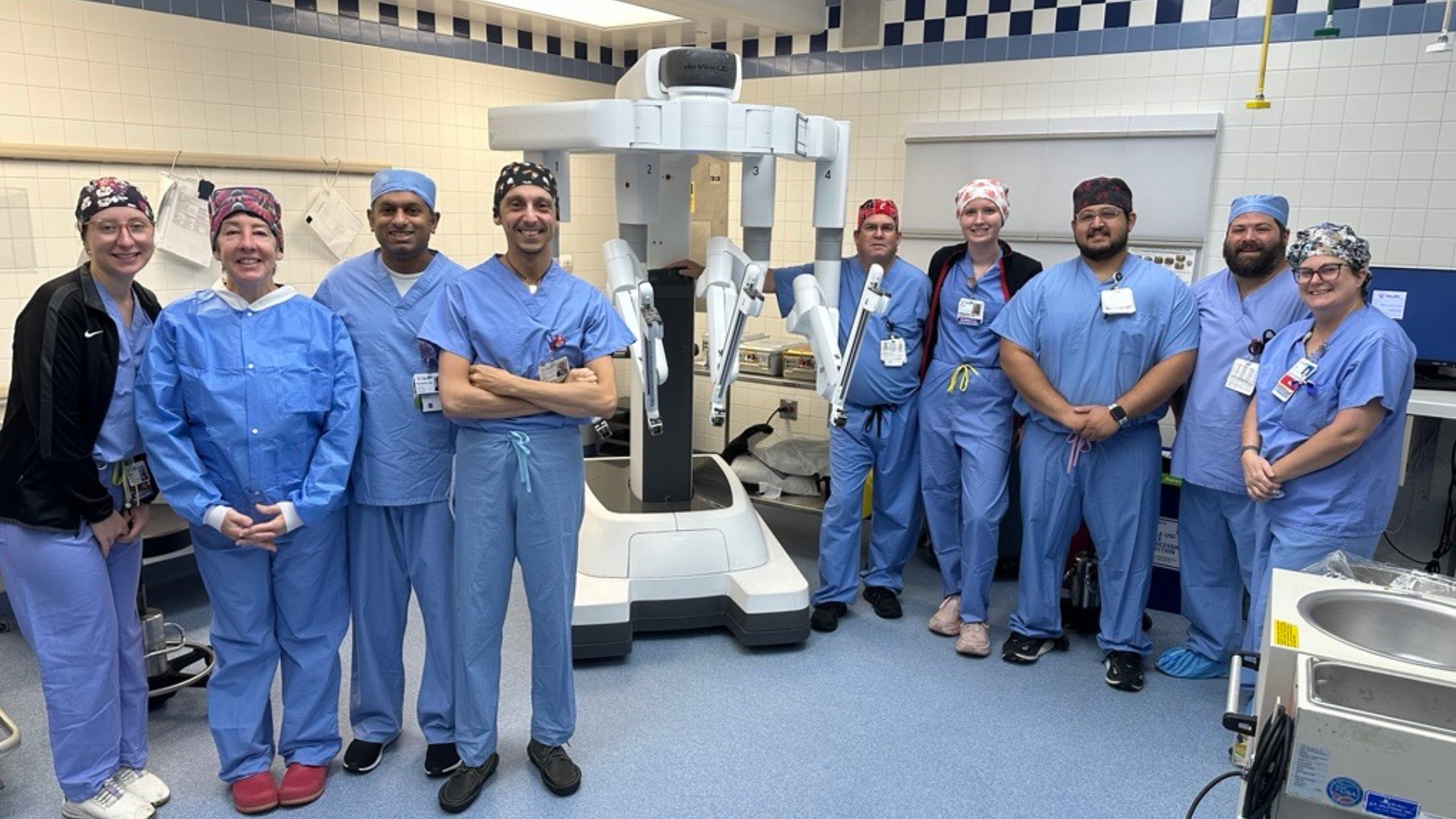
On Tuesday, September 30, our cardiac electrophysiology and cardiac surgery teams successfully performed the region’s first totally robotic atrial fibrillation (AF) ablation (hybrid AF convergent procedure) combined with left atrial appendage occlusion — marking another major milestone for our growing robotic cardiac program.
Atrial fibrillation (AF) is the most common heart rhythm disorder, affecting approximately 10.5 million US adults. It can lead to fatigue, shortness of breath, and increased risk of stroke. Traditional AF treatments often require multiple procedures or open-chest surgery — but robotic technology is changing that.
Advancing Precision and Comfort
This innovative, fully robotic approach builds on the convergent procedure UC Health introduced earlier this year. The hybrid convergent procedure combines minimally invasive surgical ablation on the outside of the heart with catheter-based ablation inside the heart. This dual approach allows for more complete and durable treatment of AF, especially for patients with long-standing or complex cases. By eliminating the need for a substernal incision, a surgical cut below the sternum, the robotic technique significantly reduces risk of complications, speeds recovery, and improves overall patient comfort.
The procedure also incorporated the use of cryoablation, a technology that temporarily freezes small nerves in the chest where the robot’s arms enter. This allows patients to experience little to no pain and eliminates the need for opioids during recovery. Sensation typically returns within three months.
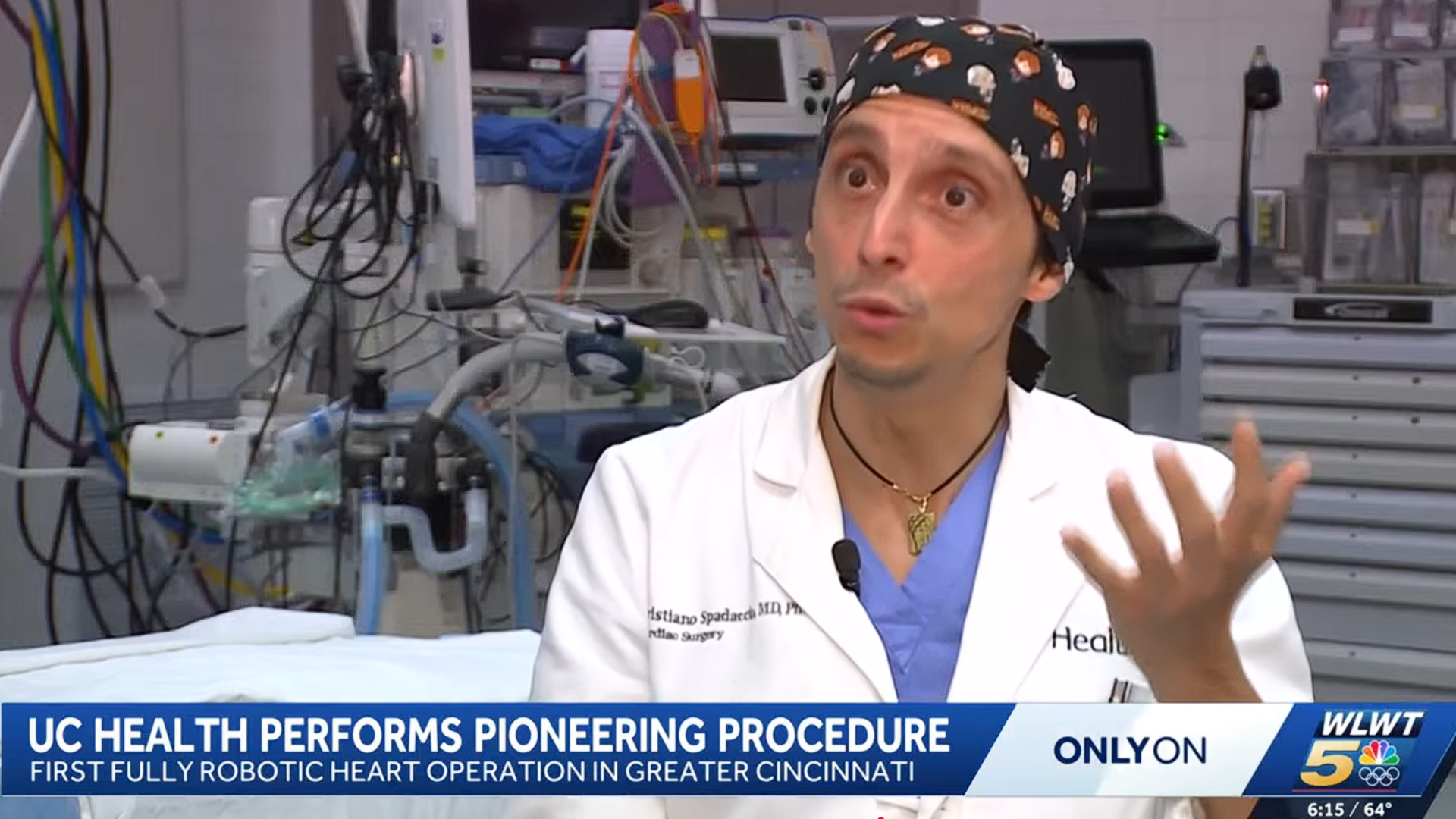
“This is a tremendous advancement in how we care for patients with atrial fibrillation,” said Dr. Cristiano Spadaccio, cardiac surgeon. “The robotic system allows us to perform the procedure with incredible precision and minimal invasiveness, improving both safety and recovery time.”
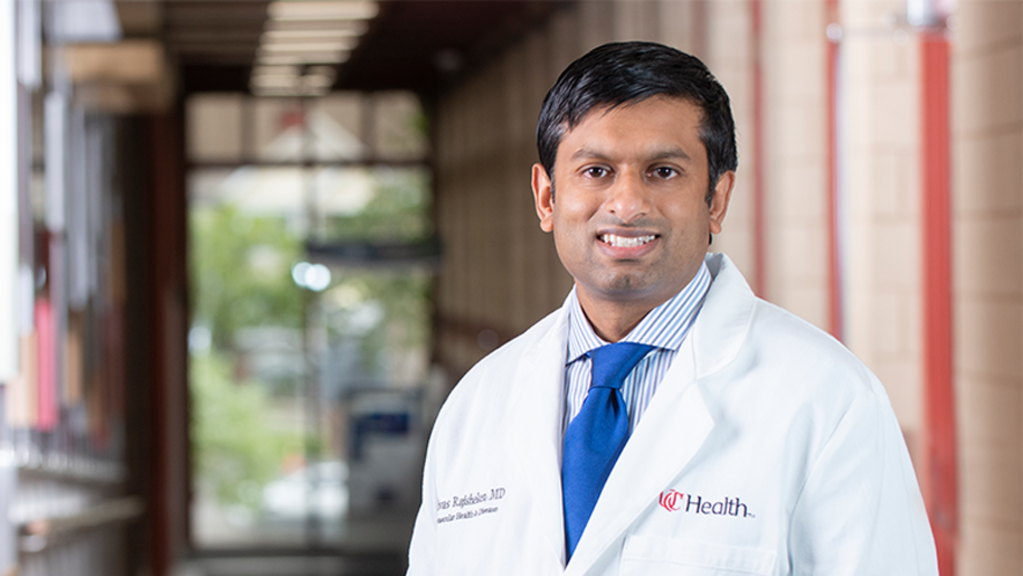
The case was a collaborative success involving cardiac electrophysiologist Dr. Srinivas Rajsheker and the cardiac surgery team — a powerful example of UC Health’s multidisciplinary strength in delivering innovative, compassionate care.
Why This Matters for Our Patients
This advancement isn’t just about technology — it’s about what it means for the people we serve. Here’s how this new approach makes a real difference for our patients:
- No large incision: The fully robotic technique eliminates the substernal wound, which means smaller incisions and faster healing.
- Less pain, no opioids: With cryoablation, patients experience minimal discomfort and typically don’t need opioid pain medication.
- Faster recovery: Patients are up and moving sooner, with less downtime and fewer complications.
- Better long-term outcomes: The precision of the robotic system allows for a safer, more effective treatment for atrial fibrillation.
- Regional leadership: UC Health is the first hospital in the region performing this fully robotic procedure — giving our community access to world-class cardiac care close to home.