Why Kidney Protection Matters During Cardiac Surgery
When patients prepare for heart surgery, most focus on their heart. But for some patients, their kidneys may face serious risks, too.
Acute kidney injury (AKI) remains one of the most challenging complications after cardiac surgery. The risk is especially high for people who already have chronic kidney disease and require procedures that use cardiopulmonary bypass. Even when surgery is successful, kidney injury can affect recovery, increase the length of a hospital stay and lead to long-term health problems.
For years, cardiac surgery teams have relied on careful planning, close monitoring and meticulous perioperative care to help reduce these risks. While those measures remain essential, patients with reduced kidney function often have limited options specifically designed to protect their kidneys during surgery.
That is why researchers continue searching for new ways to support kidney health during the most vulnerable stages of care.
At UC Health, that commitment to innovation recently reached an important milestone. As part of the GRADIENT randomized controlled trial, UC Health became the first hospital in the United States to use the JuxtaFlow Renal Assist Device. The study is evaluating whether this novel technology can help protect high-risk cardiac surgery patients from acute kidney injury during and after surgery.
For patients and families facing complex heart procedures, research like this represents more than a technological advancement. It reflects a continued effort to improve outcomes, expand treatment possibilities and address a complication that has remained difficult to prevent for decades.
A Major Milestone at UC Health
UC Health recently reached an important milestone in cardiac surgery research by performing the first U.S. cardiac surgery procedure using the JuxtaFlow Renal Assist Device as part of the GRADIENT randomized controlled trial.
The study is focused on a challenge that cardiac surgeons have faced for decades: how to better protect kidney function in patients at high risk for acute kidney injury after surgery.
For patients with existing kidney disease, even a successful heart operation can place added stress on the kidneys. While careful surgical planning and monitoring remain essential, there are few interventions specifically designed to support kidney function during the perioperative period.
The GRADIENT trial is evaluating whether a new approach may help address that gap. By participating in this national study, UC Health is helping advance research that could improve care for patients who have historically had limited options.
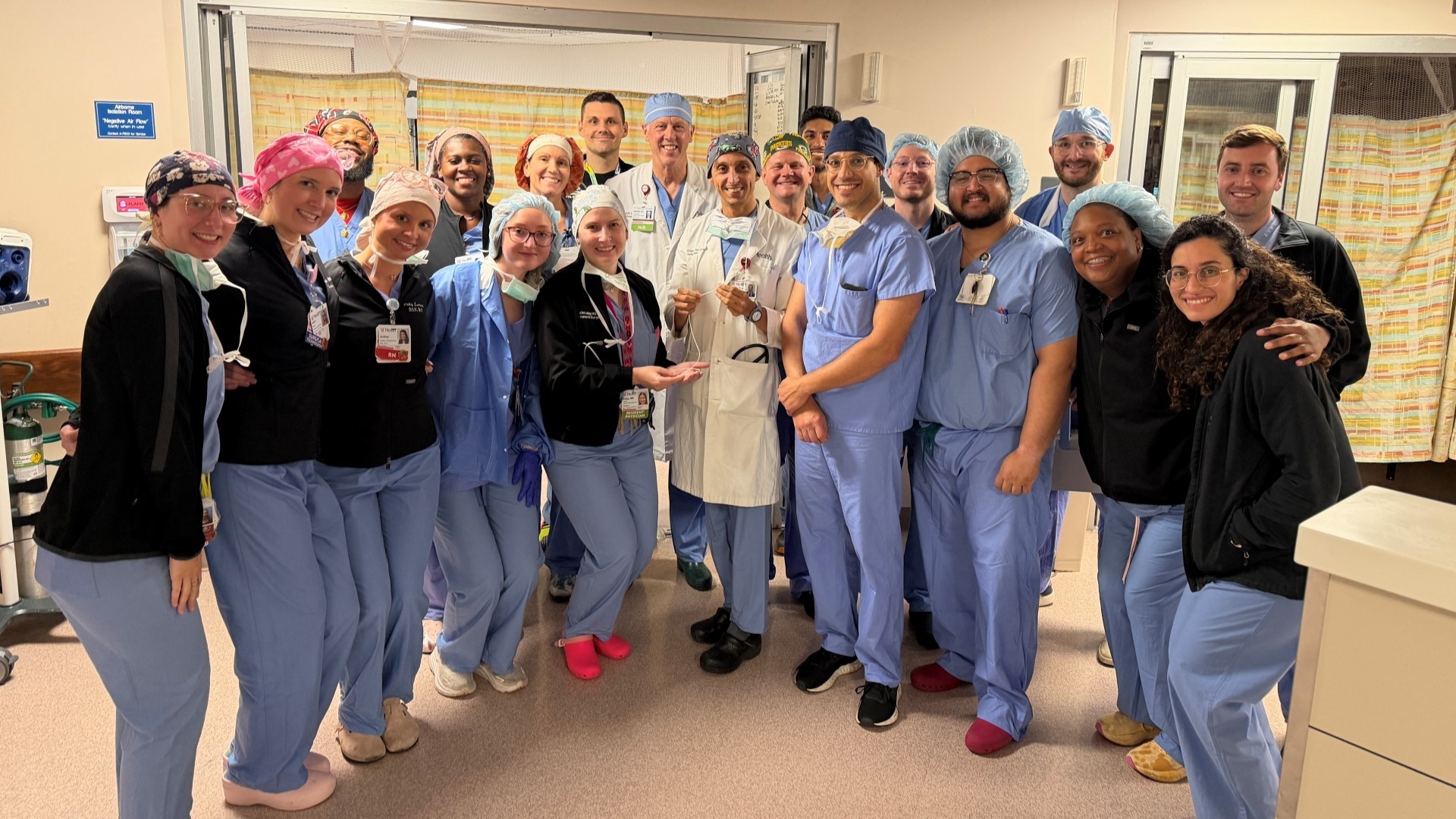
The milestone also reflects the strength of a multidisciplinary team. Cardiac surgeons, anesthesiologists, perfusionists, urologists, nurses, research coordinators and operating room staff worked together to successfully complete the first procedure, demonstrating the collaboration required to bring complex clinical research from concept to patient care.
What Is the JuxtaFlow Renal Assist Device?
The JuxtaFlow Renal Assist Device is a technology designed to support kidney function during cardiac surgery.
The temporary catheters of the device are placed by a trained urologist at the time of the routine urinary catheter placement that is already part of every cardiac surgery operation, using familiar, well-established techniques similar to those used for ureteral stent placement. They are positioned temporarily in the renal pelvis and connected to an external pump that applies mild, controlled negative pressure to the renal collecting system, with the goal of improving the filtration pressure gradient across the kidney.
For patients, the goal is simple: provide additional support to the kidneys during surgery in hopes of reducing the risk or severity of acute kidney injury. This is particularly important for people who already have chronic kidney disease, as they often face a higher risk of kidney-related complications after cardiac surgery.
The JuxtaFlow technology has previously been evaluated in patients hospitalized with heart failure who were not undergoing surgery. That early clinical experience showed encouraging improvements in urine output and sodium removal. Those findings provided the rationale for evaluating this promising approach in cardiac surgery, where patients with chronic kidney disease face a particularly high risk of acute kidney injury.
Who May Benefit From This Clinical Trial?
The GRADIENT trial is designed for cardiac surgery patients who face an increased risk of acute kidney injury, particularly those with pre-existing chronic kidney disease.
Many of these patients require procedures that use cardiopulmonary bypass, which can place additional stress on the kidneys during surgery. Because kidney injury can affect recovery and long-term health, researchers are exploring new ways to provide protection during this vulnerable period.
Not every patient undergoing heart surgery will be a candidate for the trial. Eligibility is based on several factors, including medical history, kidney function and the type of procedure being performed.
For patients who qualify, participation offers an opportunity to contribute to research that could help improve care for future cardiac surgery patients while receiving close monitoring from an experienced clinical team.
Patients interested in clinical trial participation should speak with their cardiac surgeon and care team to learn whether a research study may be appropriate for their individual situation.
Advancing Care Through Teamwork and Research
Bringing a new technology from research to the operating room takes more than a single physician or specialty. The first U.S. cardiac surgery procedure using the JuxtaFlow Renal Assist Device was made possible through collaboration across multiple teams at UC Health.
Cardiac surgeons worked alongside anesthesiologists, perfusionists, urologists, nurses, research coordinators and operating room staff to plan and perform the procedure. Each team played an important role in ensuring the study was carried out safely and according to protocol.
The successful first case also reflects the value of academic medicine. As an academic health system, UC Health participates in clinical research that helps evaluate promising new technologies and expand treatment possibilities for patients facing complex conditions.
Participation in JuxtaFlow studies such as the GRADIENT trial gives patients access to innovative research while helping physicians answer important questions about future care. It is part of UC Health's broader commitment to improving outcomes through discovery, collaboration and evidence-based medicine.
Learn More About Cardiac Surgery at UC Health
If you are considering cardiac surgery and have concerns about kidney health, talk with your care team about your individual risk factors and whether participation in a clinical trial may be an option. Research studies like GRADIENT are helping shape the future of heart care while addressing some of its most challenging complications.
From valve care to aortic surgery, your team may be able to offer options not available everywhere. Call UC Health Cardiac Surgery at 513-475-8521.