- EJ collapsed at home after an evening out with his mom. He was diagnosed with a brain hemorrhage caused by a ruptured aneurysm.
- The medical team at the UC Health discovered the location and shape of his aneurysm was unusual and would require a new procedure to help redirect blood flow.
- Just months after his hemorrhage, EJ returned to the lacrosse field and golf course with a new sense of purpose.
Patient Stories
Back in the game: EJ’s recovery after a brain hemorrhage and return to the life he loves
Sep. 8, 2026
A sudden brain hemorrhage turned EJ Upton’s world upside down. Months later, the collegiate athlete was back doing many of the things he loved, with a new perspective on what’s possible.
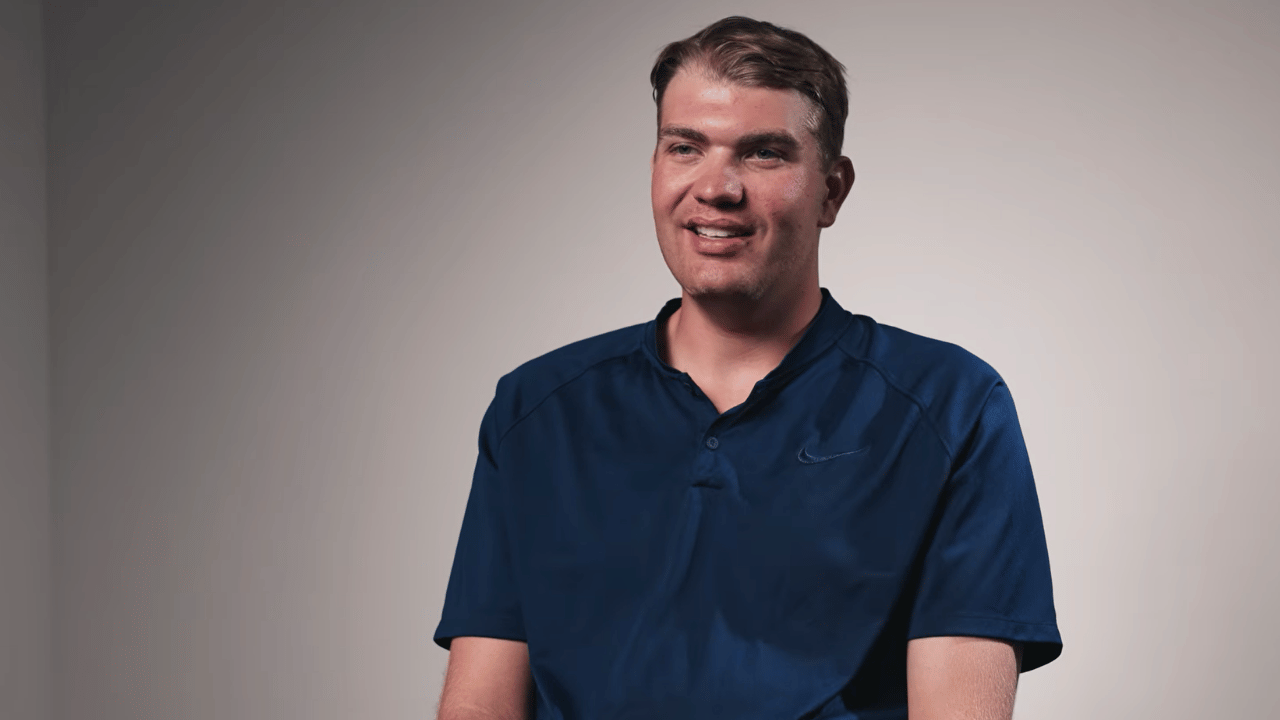
Watch EJ and his mom, Sarah, share their story.
A night that changed everything
On December 29, 2025, EJ was having a nice evening out with his mom, Sarah. Sarah had decided to cash in her “mother-son date” coupon she received as a Christmas gift. So the two enjoyed dinner and then a movie. EJ drove them home as snow began to fall.
Once they were inside, EJ turned on a football game. Then, without warning, everything changed.
“It felt like something hit me in the back of the head,” EJ said. “I didn't know what it was. Vision went blurry. And then somehow I made it to my kitchen and I passed out.”
Sarah was on the phone with a family member when she heard the sound of her son falling.
“At first I thought one of our dogs had knocked him out,” she said. Within seconds, Sarah recognized that something was seriously wrong. EJ’s hands clenched and he began having seizure-like symptoms. She called 911.
Getting the right care when every second mattered
Paramedics transported EJ to UC Health’s West Chester Hospital, where a scan revealed bleeding in his brain. The team determined he needed the next level of specialized care and transferred him to UC Medical Center, home to one of the region’s most advanced Neuroscience Intensive Care Units (NSICU).
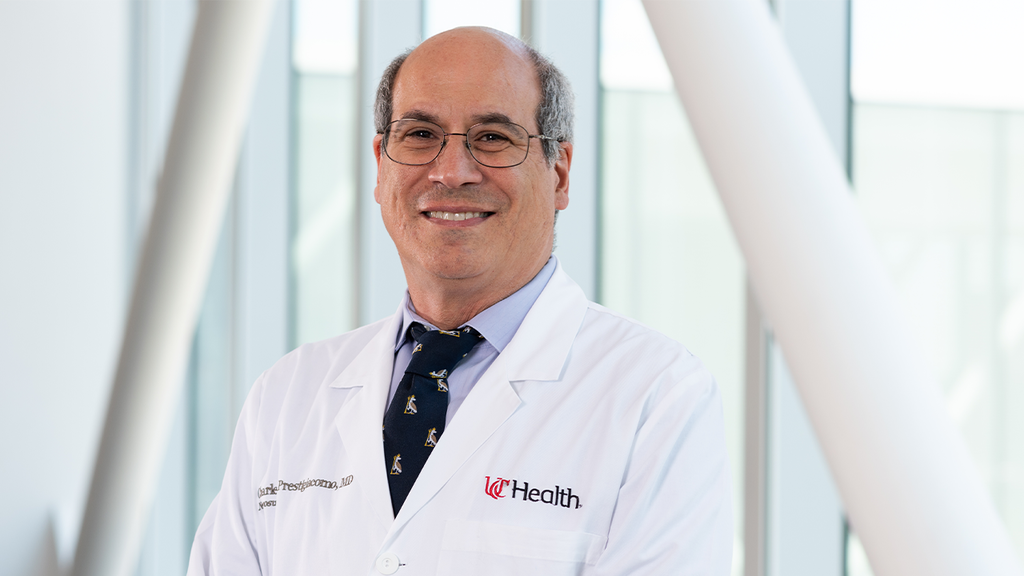
Because of the weather, an airlift wasn’t possible. Instead, EJ made the trip by ambulance, accompanied by a physician, while teams at UC Medical Center prepared for his arrival. Among them was UC Gardner Neuroscience Institute neurosurgeon Charles J. Prestigiacomo, MD, who was on call when he learned EJ was being transferred. Once EJ arrived at UC Medical Center, the neurocritical care team immediately began working to stabilize him.
EJ had suffered a subarachnoid hemorrhage—bleeding around the brain, most commonly caused by the rupture of an aneurysm.
“It's like a blister on a tire,” Dr. Prestigiacomo explained. “This one had broken and caused significant immediate neurological injury.”
Imaging revealed that EJ’s aneurysm was particularly unusual. It was a small, blister-like aneurysm located in the back of the brain. Its location and shape made treatment especially complex.
For EJ, however, there was little time to waste.
“It was imperative that we did our best to treat him as quickly and efficiently as possible,” Prestigiacomo said.
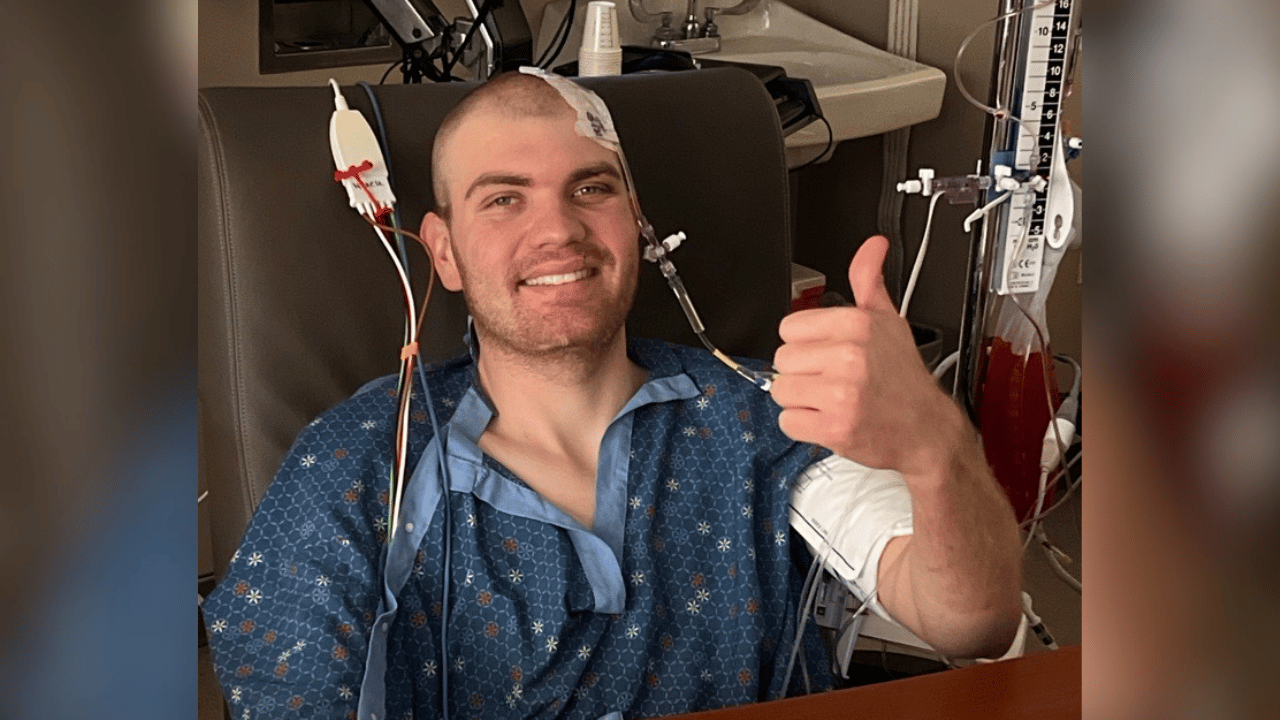
EJ gives a "thumbs up" from the UC Medical Center hospital during his treatment. | Photo provided by patient.
A new way to take on a tough case
While the medical team moved quickly, Sarah and her family were trying to understand what was happening. When Dr. Prestigiacomo came to speak with them, he sat down with a notebook and began drawing pictures.
“We knew it was an aneurysm, but what does that mean?” Sarah said. “He drew the pictures and explained it. He probably spent at least 30 minutes just explaining it very calm, very confidently.”
Dr. Prestigiacomo explained the treatment options and what the team would do next. Because of the aneurysm’s delicate location and shape, the team decided to use a newer endovascular technology called a flow diverter. The procedure uses a small device placed inside the blood vessel to redirect blood flow away from the aneurysm, allowing the aneurysm to clot off over time.
For Sarah, the details were difficult to absorb. What she remembers most was Dr. Prestigiacomo’s optimism that they could handle it. “It was horribly scary and we don’t know what’s happening, but he said, ‘I got this, I’m behind you,’” she said. “And that’s all I needed.”
The procedure successfully secured the aneurysm, but EJ’s recovery was far from over. For the next 16 days in the hospital, EJ’s time would be filled with monitoring, treatment, rehabilitation and the support of a care team that his family says made an enormous difference.
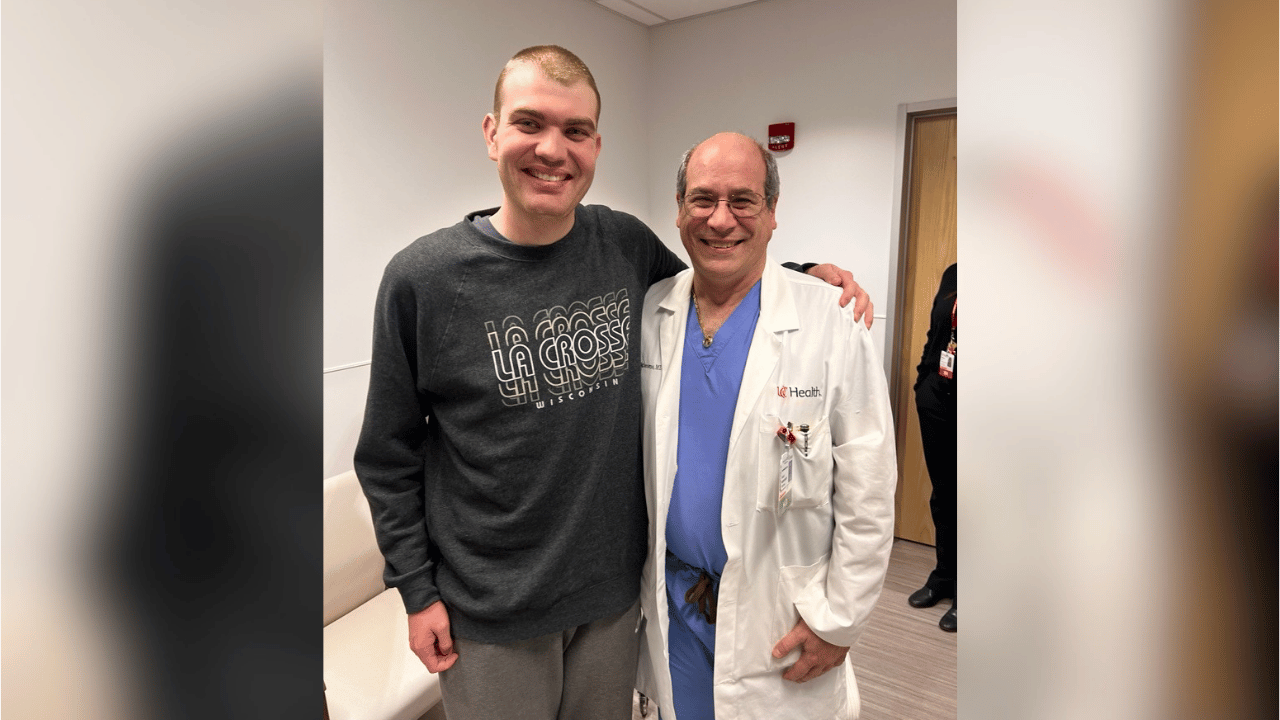
EJ and Dr. Prestigiacomo smile together for a photo during one of EJ's follow up appointments. | Photo provided by patient.
A team who saw him as a person first
EJ remembers the nurses and doctors being calm and reassuring, even when he didn’t fully understand how serious his condition was.
“I got the greatest care I could have asked for,” he said. “I’m just grateful and blessed that we have this type of care.”
One nurse, Julie, left a lasting impression. After a particularly difficult night with pain, EJ was feeling discouraged. Julie came back to check on him and noticed something that, at the time, felt almost insignificant.
“‘You’re the only one on this floor [healthy enough to be in here] wearing sweatpants,’” EJ remembers her telling him. “‘You got this. You can get through it.’” It was exactly what he needed to hear.
Another moment came after EJ had returned for a follow-up appointment. Brendan, a member of Dr. Prestigiacomo’s team, recognized him from his hospitalization. “He's like, ‘I don't think you remember me, but man, you're looking great. You're doing such a great job,’” EJ said.
Those moments helped EJ see himself not as the critically ill patient he had been, but as the young man who was getting better.
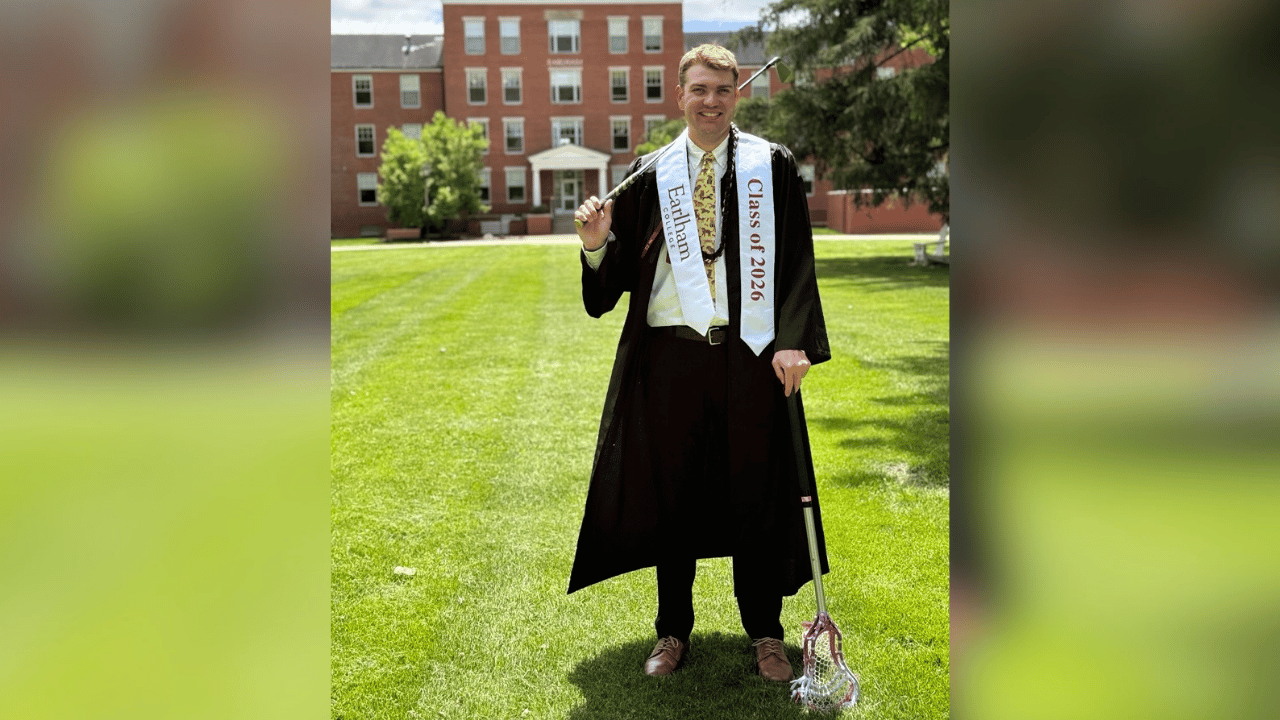
EJ poses with a golf club and lacrosse stick for his graduation photo. | Photo provided by patient.
A new path forward
Going home was a milestone, but it was also difficult. EJ had been preparing for a very different year. He had planned to play a fifth year of lacrosse in England while pursuing a master’s degree in business. Suddenly, he wasn’t sure whether he would ever play lacrosse again.
At home, he had to adjust to taking medication, walking instead of driving and gradually returning to school. He watched his lacrosse teammates practice and travel while he recovered.
“The whole trajectory of his life had changed just like that,” Sarah said.
Then came EJ’s first follow-up appointment with neurosurgery. When he walked into the office, the reaction from the care team gave EJ the reassurance he needed.
Dr. Prestigiacomo said, “I fixed you.”
For EJ, those three words became a turning point. He challenged EJ’s assumption that his future was over. Maybe he wouldn’t be back on the field immediately. But, with time and recovery, he could return to physical activity.
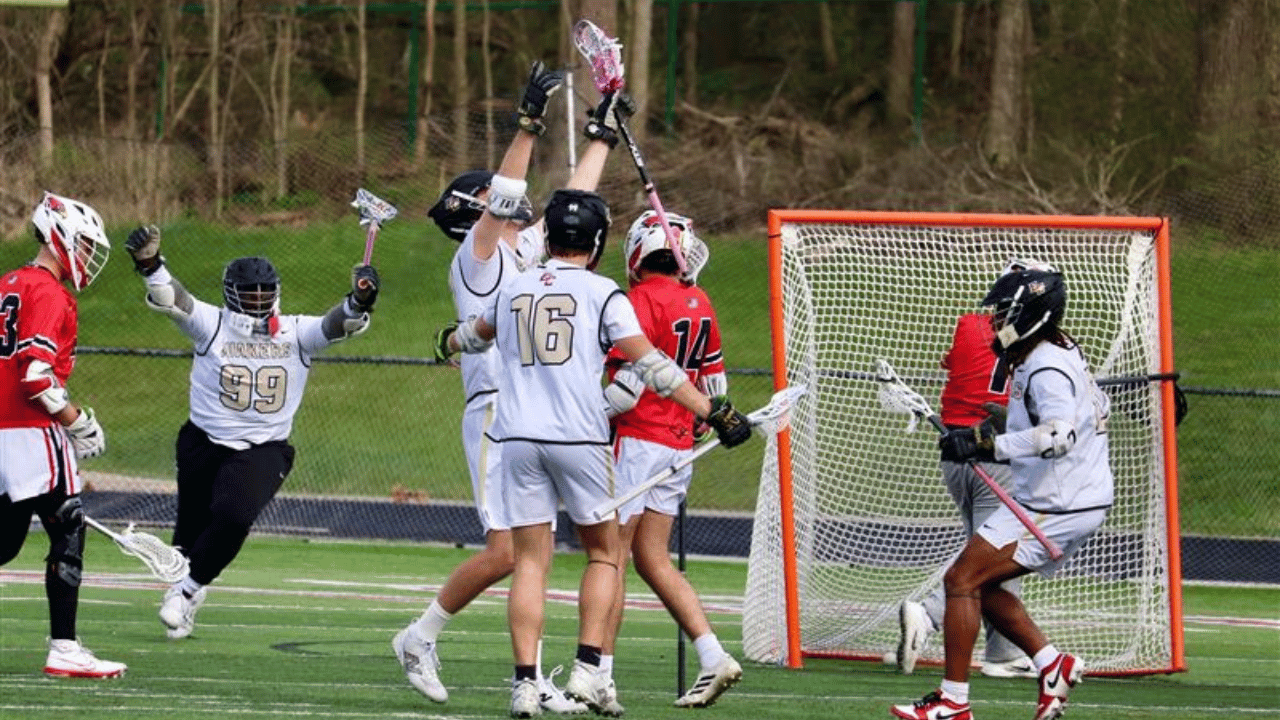
Back on the lacrosse field, EJ capped his remarkable recovery with a goal for his team. | Photo provided by patient.
Back on the field
EJ returned to school and slowly began rebuilding the life he thought he had lost. His coaches, professors, teammates and family all supported his recovery and helped him determine when it was safe to return to competition.
In the spring, EJ got his chance to step back onto the lacrosse field.
With his team comfortably ahead, he received permission to play just five minutes, with a running clock and strict instructions to avoid contact. Then the ball found him.
An opposing player knocked it down, but the ball rolled back to EJ. He picked it up, shot and scored.
“I start crying,” EJ said. “All of my teammates are hugging me and I’m just crying.” EJ had scored his team’s 20th goal.
Two weeks later, he reached another milestone. At his senior golf invitational, EJ played his home course with his dad watching. He finished with his best round.
“Those were probably my best moments of golf and my best moment of lacrosse,” EJ said. “And it all happened after this traumatic injury. It’s unbelievable.”
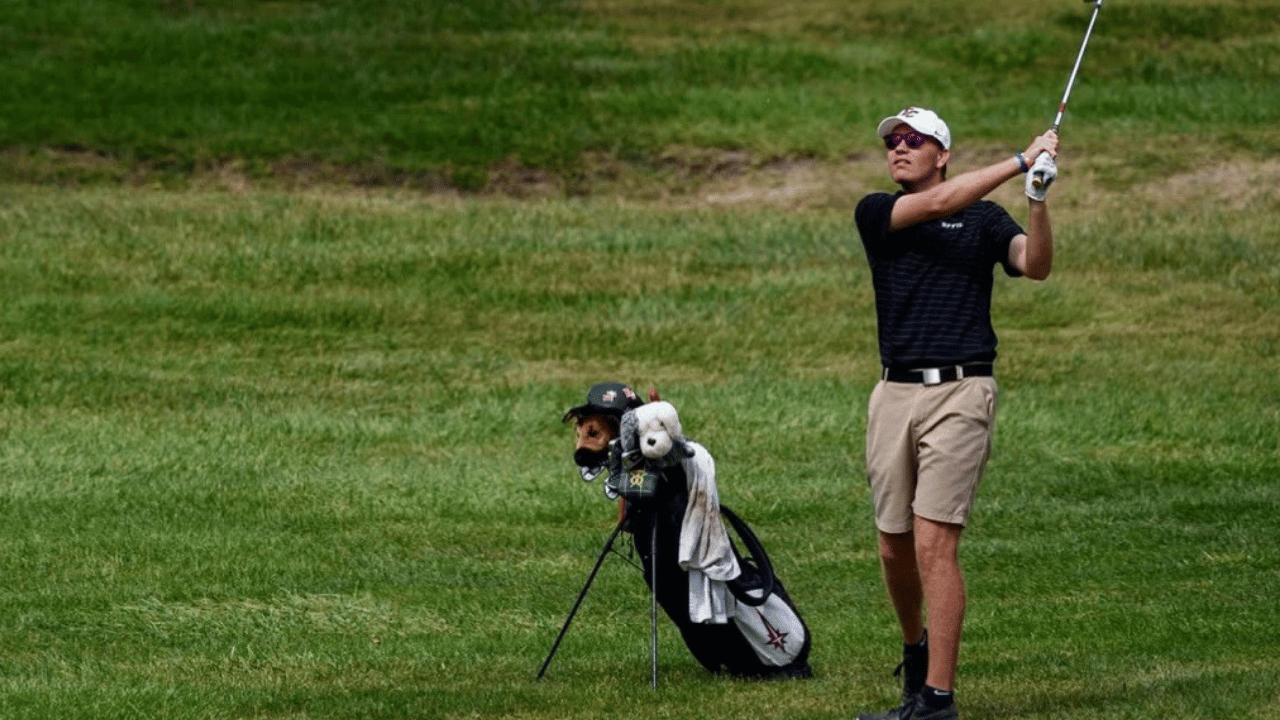
With the support of his teammates, coaches and family, EJ returned to the course for his senior invitational and added another unforgettable chapter to his comeback story. | Photo provided by patient.
Living life with gratitude
EJ continues to take medication and undergo follow-up imaging while making small changes to his daily routine, including staying hydrated, staying active and keeping a careful medication schedule. He’s also learning to live with a new awareness of what happened without letting it define him.
“I’m just trying to live life as best I can and kind of being aware of it, being cautious but not constantly thinking about it,” EJ said.
For Sarah, the experience has left her family with a profound sense of gratitude — for the specialized care at the UC Gardner Neuroscience Institute and the team that helped EJ recover. “We want 10 more Doctor P’s here on Earth so they can save more lives,” she said.
Today, EJ has finished his degree, still enjoys golf, and is looking ahead to what comes next, including starting his graduate studies. “I’d say manifest good things. Good things will happen if you think positively,” EJ says.
He and his mom share a tattoo that says, “manifest”—a reminder of the mindset that carried him through his darkest days and continues to move him forward.
Learn more about the expert neurosurgery care provided by the UC Gardner Neuroscience Institute or schedule an appointment by calling 513-475-8990.