Patient Story

Two Months After a Heart Attack, Alex Crossed the Boston Marathon Finish Line

Jul. 16, 2026

After a life-threatening heart attack, UC Health's coordinated heart care helped Alex recover safely, and his determination carried him across the Boston Marathon finish line.


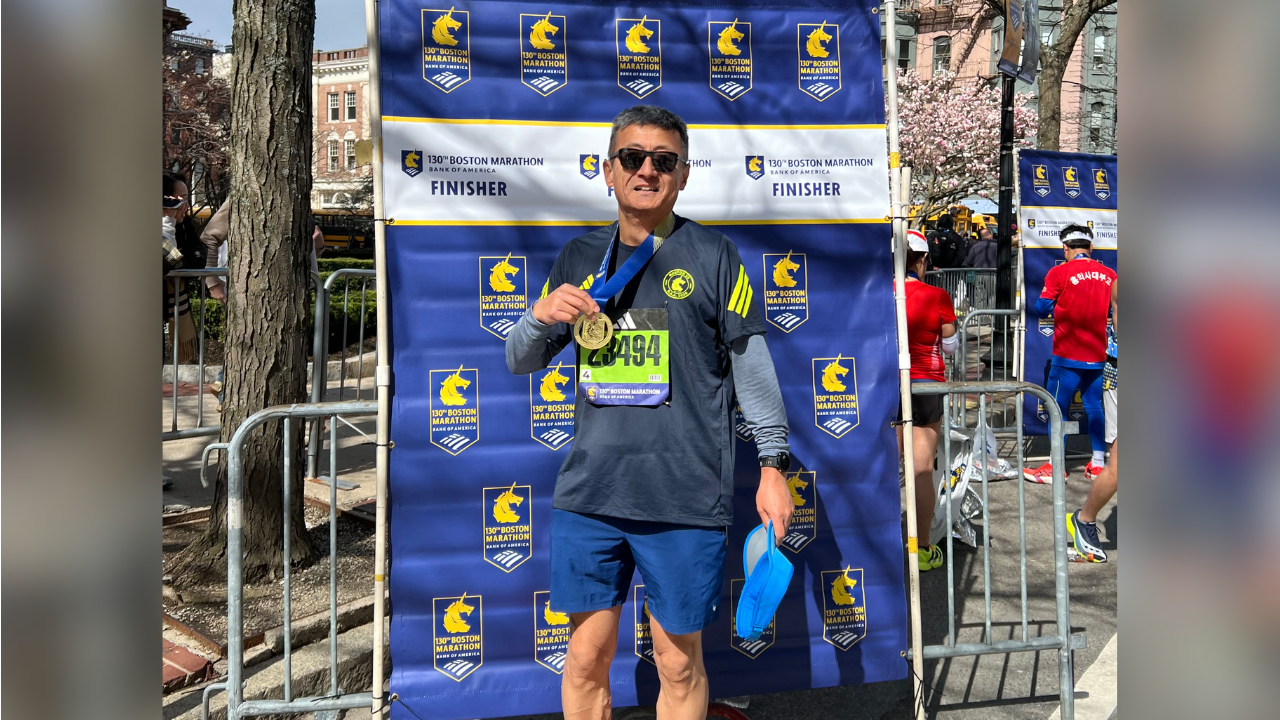
Alex Lui poses with his medal after finishing the 2026 Boston Marathon

Alex Liu celebrates a hard-earned milestone, posing with his medal after crossing the finish line of the 2026 Boston Marathon. | Photo provided by patient.

  •  After discovering a passion for running later in life, Alex set his sights on one of the sport’s most iconic goals.
  • Rapid emergency care at UC Health and a coordinated recovery plan helped him safely return to running.
  • With expert care, determination and support from his care team, Alex found a way to achieve his dream.

From emergency heart attack care to cardiac rehabilitation and long-term follow-up, UC Health provides seamless, expert heart care at every stage of the journey. Call 513-475-8521.

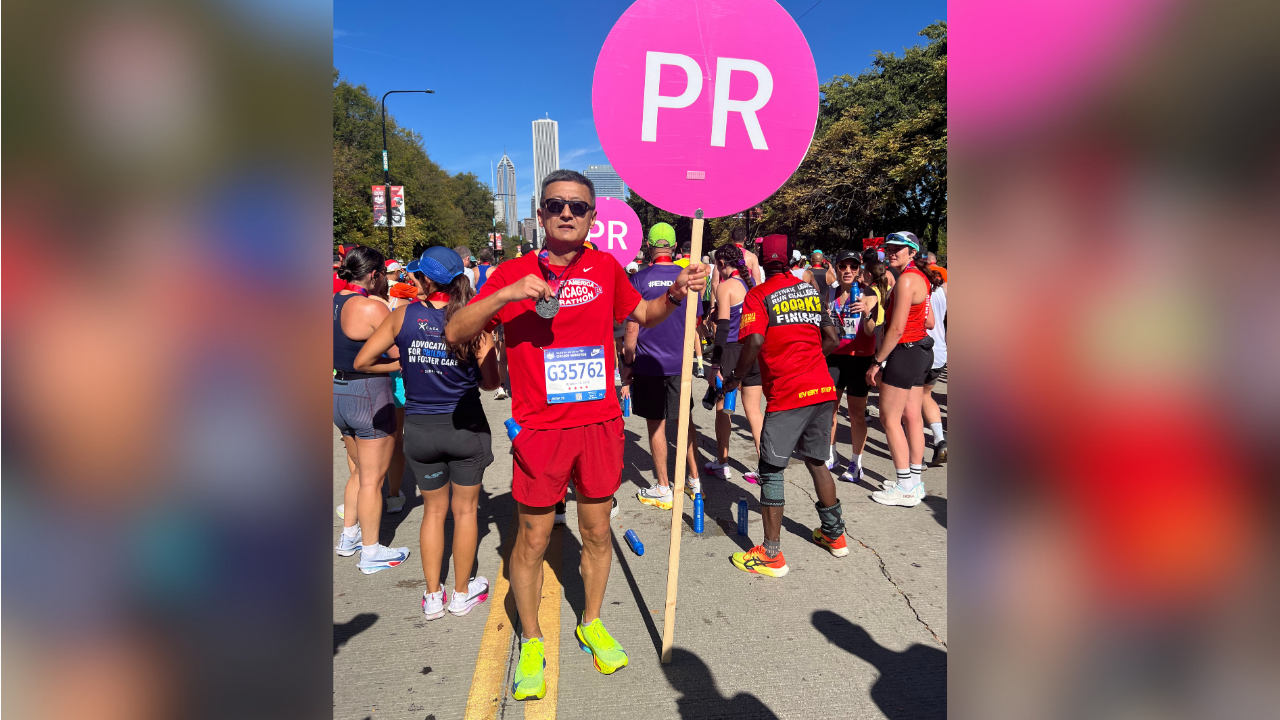
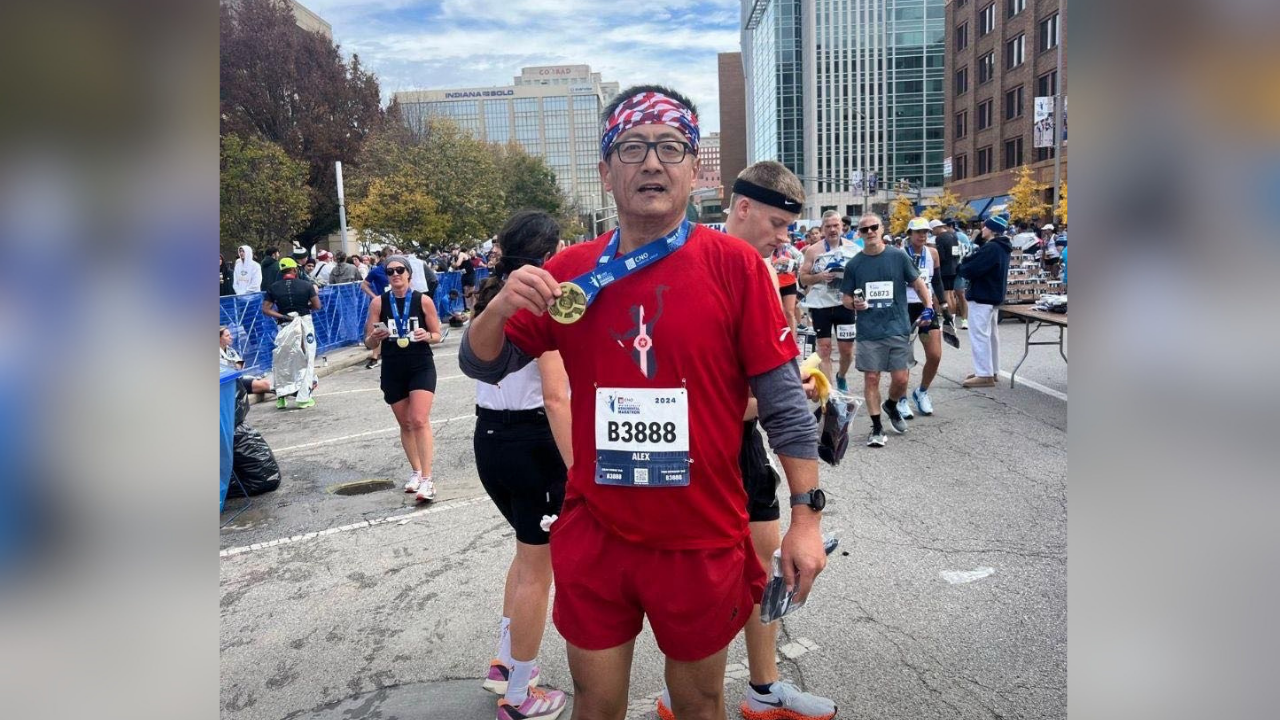
Alex after completing personal records at both the 2025 Chicago Marathon and the 2025 Indianapolis Monumental Marathon. | Photos provided by patient

Discovering a Passion for Running

At 61 years old, Alex Liu never expected to become a marathon runner.

In fact, he didn’t even start running until 2019.

What began as a casual five-mile race with a friend quickly turned into something much bigger. During the pandemic, Alex found himself running 25 to 30 miles a week, using the time he once spent commuting to build endurance and confidence. Just a few years later, the retired Ford Motor Company engineer — now working a second career with GE Aerospace — accomplished something many runners only dream about: qualifying for the legendary Boston Marathon.

“I was very proud,” Alex says. “I started running six years ago and then qualified for Boston at my age. To me, that was a journey. It showed me that if you make the effort and keep trying, you can achieve your goals.”

But just weeks before the race, that journey took an unexpected turn.

A Life-Threatening Emergency

Alex was deep into training for the Boston Marathon, running 40 to 50 miles each week through the winter months.

Then, on a Monday morning in February 2025, everything changed.

“I just felt a little bit dizzy and short of breath,” Alex recalls. “I went to get some water in the kitchen and collapsed.”

His wife immediately called 911.

Within minutes, EMS crews arrived and performed an EKG (electrocardiogram) in the ambulance that revealed Alex was having a STEMI – a severe type of heart attack caused by a sudden blockage in a coronary artery.

Alex was rushed to UC Health’s West Chester Hospital, where the cardiac team moved quickly to open multiple blocked arteries through an emergency multivessel PCI procedure.

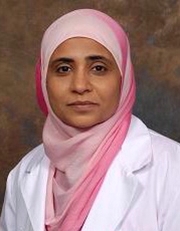
“With a STEMI, every minute matters. Alex’s outcome is a testament to the importance of rapid recognition, EMS activation, coordinated emergency response, and immediate access to advanced cardiac intervention,” said Tehmina Naz, MD, Medical Director of UC Clinical Cardiology at West Chester Hospital.

During treatment, Alex experienced dangerous ventricular tachycardia, a dangerous rapid heart rhythm, due to a critical blockage in his left anterior descending artery, often referred to as the “widowmaker.” The care team returned him to the cardiac catheterization lab to place an additional stent and restore blood flow to his heart.

Once blood flow was restored, Alex says the difference was immediate.

“From that point on, I felt great,” he says. “It almost felt like nothing had happened.”

Looking back, Alex realizes how critical every moment was.

“Everybody handled everything perfectly,” he says. “From the EMS team to the ER staff to the cath lab, everyone was so professional. Later, after I got home, I started reading more about my condition and realized many people don’t survive something like this. I was incredibly lucky.”

Alex training on a track

Alex training on a running track. | Photo provided by patient.

A Team Approach to Recovery

While the emergency intervention saved Alex’s life, his recovery became a multidisciplinary effort involving UC Health physicians, nurses, cardiac rehabilitation specialists and ongoing outpatient follow-up care.

“Alex’s recovery really highlights what can happen when patients receive comprehensive care across every stage of the journey — from EMS and emergency intervention to follow-up care and cardiac rehabilitation. Everyone played a role in helping him safely return to the life he loves”, said Michelle Schaffer, CNP, cardiology Nurse Practitioner.

After two days in the hospital, Alex returned home — and almost immediately started exercising again.

“The next day, I was walking one or two miles,” he says. “Then four or five miles.”

Just over two weeks later, he carefully returned to running.

Boston was still on his mind.

“I didn’t want to give up,” Alex says. “I didn’t want this to suddenly define me as someone who was going downhill.”

With guidance from his physicians and support from cardiac rehabilitation specialists at UC Health, Alex slowly rebuilt his endurance. He participated in monitored cardiac rehab sessions twice a week, running on a treadmill while clinicians tracked his heart rhythm and recovery.

“That gave me peace of mind,” he says. “After something like this, everybody is nervous about what could happen if you’re out running alone. Cardiac rehab helped me feel confident again.”

“Cardiac rehab is about much more than exercise. It helps patients rebuild confidence, safely regain strength and understand how to return to activity after a major cardiac event. Heart disease can impact anyone, and we were happy to be a part of Alex’s journey through it,” said Chad Balilo, MS, Manager of Cardiopulmonary Rehabilitation and Cancer Exercise Wellness.

Alex says his care team encouraged him to stay active while helping him understand how to safely return to exercise.

“They told me exercise is good,” he says. “They just wanted me to be smart about monitoring my heart rate.”

Only one month after his heart attack, Alex completed the Cincinnati Heart Mini 10K.

Then came Boston.
Crossing the Finish Line

Just two months after suffering a life-threatening heart attack, Alex stood at the starting line of the Boston Marathon.

This time, his strategy looked different. He paced himself carefully, monitored his heart rate and incorporated short walk breaks throughout the race.

But he finished.

Alex crossed the finish line in 4 hours and 15 seconds.

“Twenty minutes slower than my best time,” he said with a smile. “But I was very happy.”

For Alex, completing Boston became about far more than running.

“It was symbolic,” he said. “I wanted to prove to myself — and maybe to other people too — that I could fully recover. I didn’t want to give up.”

Today, Alex continues training and hopes to run Boston again someday — maybe even setting a new personal record.

When he looks at his Boston Marathon medal now, it carries an even deeper meaning.

“It represents the journey,” he says. “Life can take different turns, and my heart attack was definitely a detour. But I made it.”

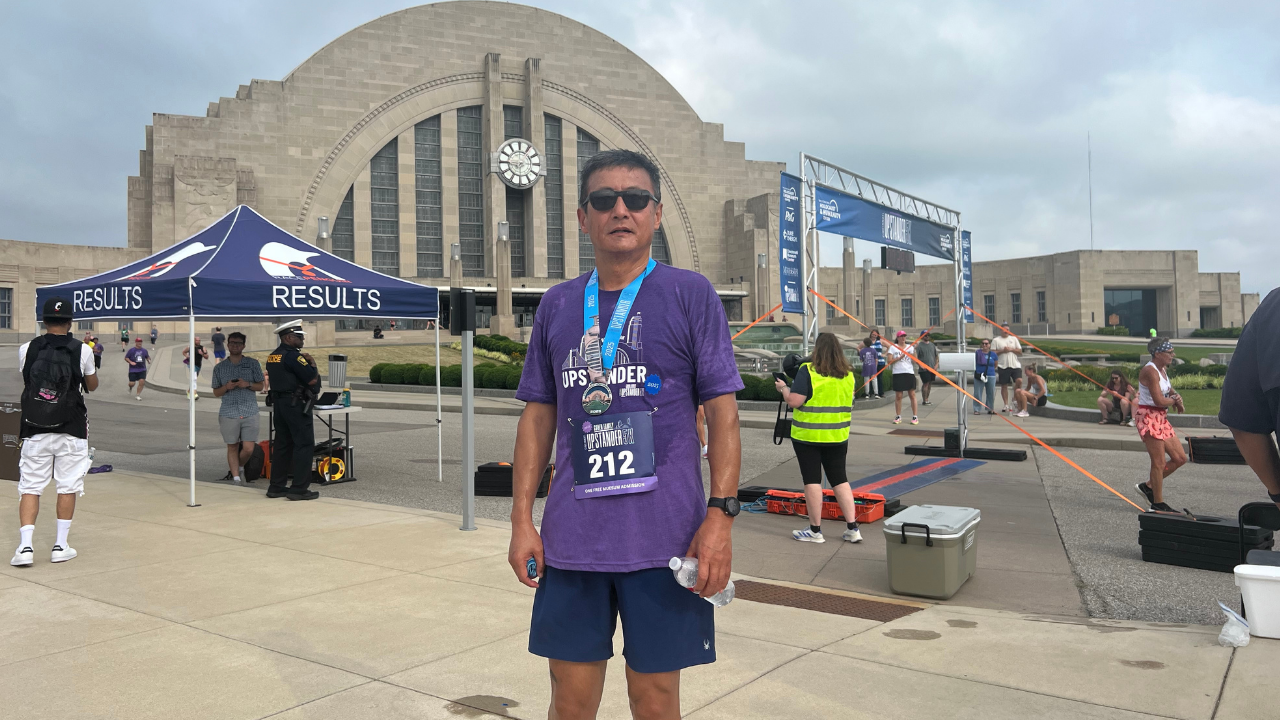
Alex in front of Union Terminal after the 2025 Upstander 5k in Cincinnati, Ohio. | Photo provided by patient.

Grateful for a Second Chance

Throughout his recovery, Alex leaned on encouragement from his family, friends and running community. He also credits his faith for helping him move forward.

“I’m very grateful,” he says. “Everything happened so quickly and so perfectly. I believe there was a purpose.”

Now, Alex hopes his story reminds others that recovery after a major cardiac event is possible — especially with timely intervention, expert care and determination.

“One of the most important messages from Alex’s story is that heart attacks can happen even in people who appear very healthy and active. Recognizing symptoms quickly and seeking emergency care immediately can save your life,” shares Dr. Naz.

“Life is a journey,” Alex says. “It may not always be smooth, but you keep going.”

We Take Care to the Next Level

Alex's story is a reminder that when every second matters, having access to expert, coordinated care can make all the difference.

UC Health Heart & Vascular team provides advanced care across the full continuum. From emergency intervention and complex cardiac procedures to rehabilitation and ongoing support designed to help patients regain strength, confidence and quality of life.

No matter where you are on your heart health journey, we're committed to helping you move forward. Call 513-475-8521.

Featured Providers:

Heart and Vascular Care
Practices: Cardiovascular Disease , Cardiology , General Cardiology , Heart Failure
Heart and Vascular Care , Cardiovascular Care , Internal Medicine
Practices: Cardiology , Cardiovascular Disease
Chad Bailio, MS
Rehabilitation, Heart and Vascular Care

Practices: Cardiac Rehabilitation, Cancer Excercise Wellness

Back to Top
x