Patient Stories

A light in the darkness: Cincinnati man takes small steps toward saving lives through living organ donation

Aug. 10, 2026

When a Cincinnati man decided to learn more about living organ donation, he never expected where that first small step would lead. His story highlights the impact of altruistic kidney donation, living liver donation and the power of small steps.


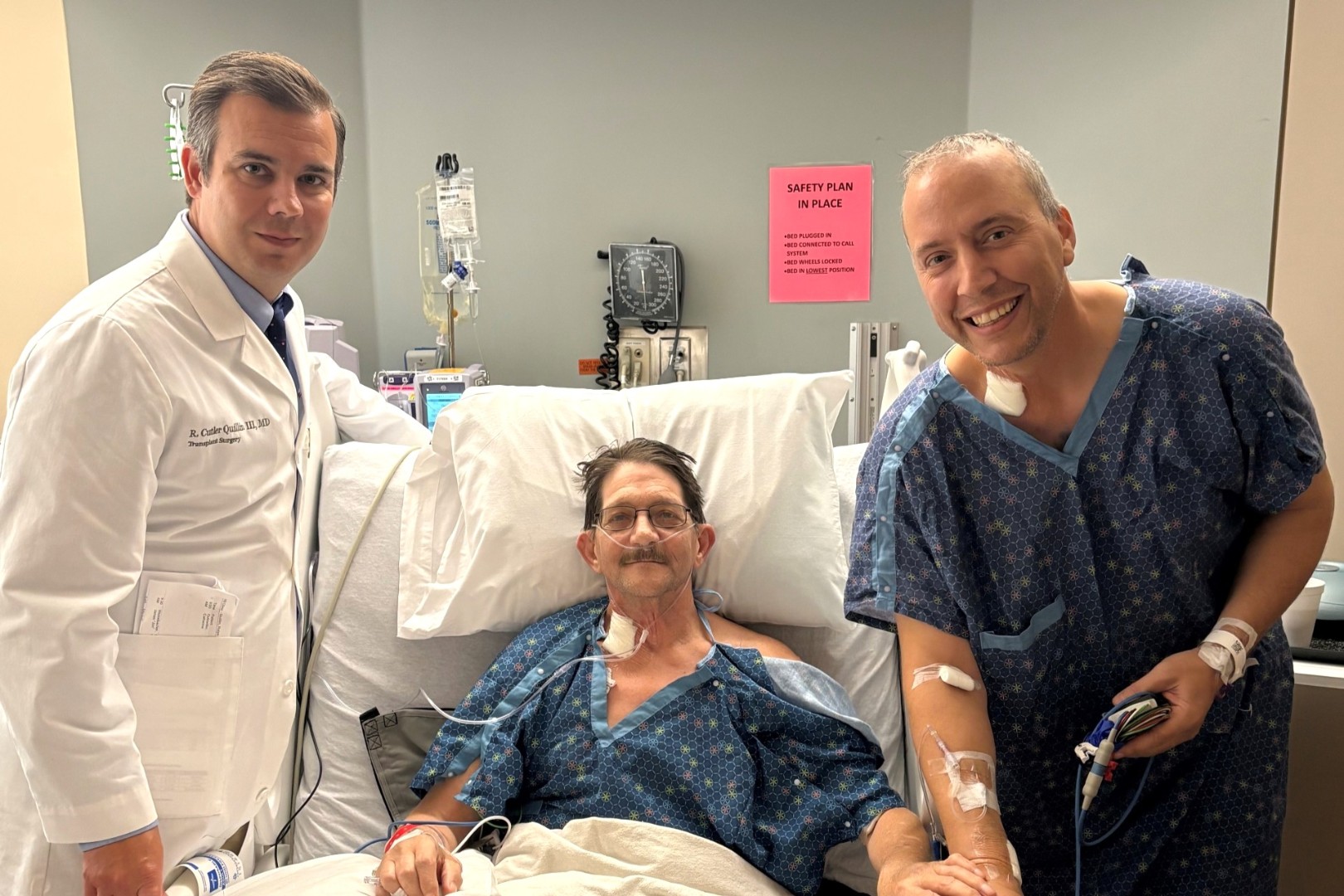
Physician stands by patient and Mark in a medical setting.

A small moment set Mark on a path that would eventually lead him to altruistically donate not only a kidney, but also part of his liver—giving two people a second chance at life. | Photo provided by patient.

  • A chance encounter with a neighborhood sign inspired Cincinnati resident Mark to learn more about living organ donation.
  • By taking small steps and asking questions, he discovered that helping others might be easier than he imagined.
  • Years later, two life-changing donations led to an unexpected connection and a lasting impact on multiple lives.

The gift of life begins with one step. Start the conversation to learn what’s possible. Contact the UC Health living donor team by calling 513-584-8313 or completing our online interest form.
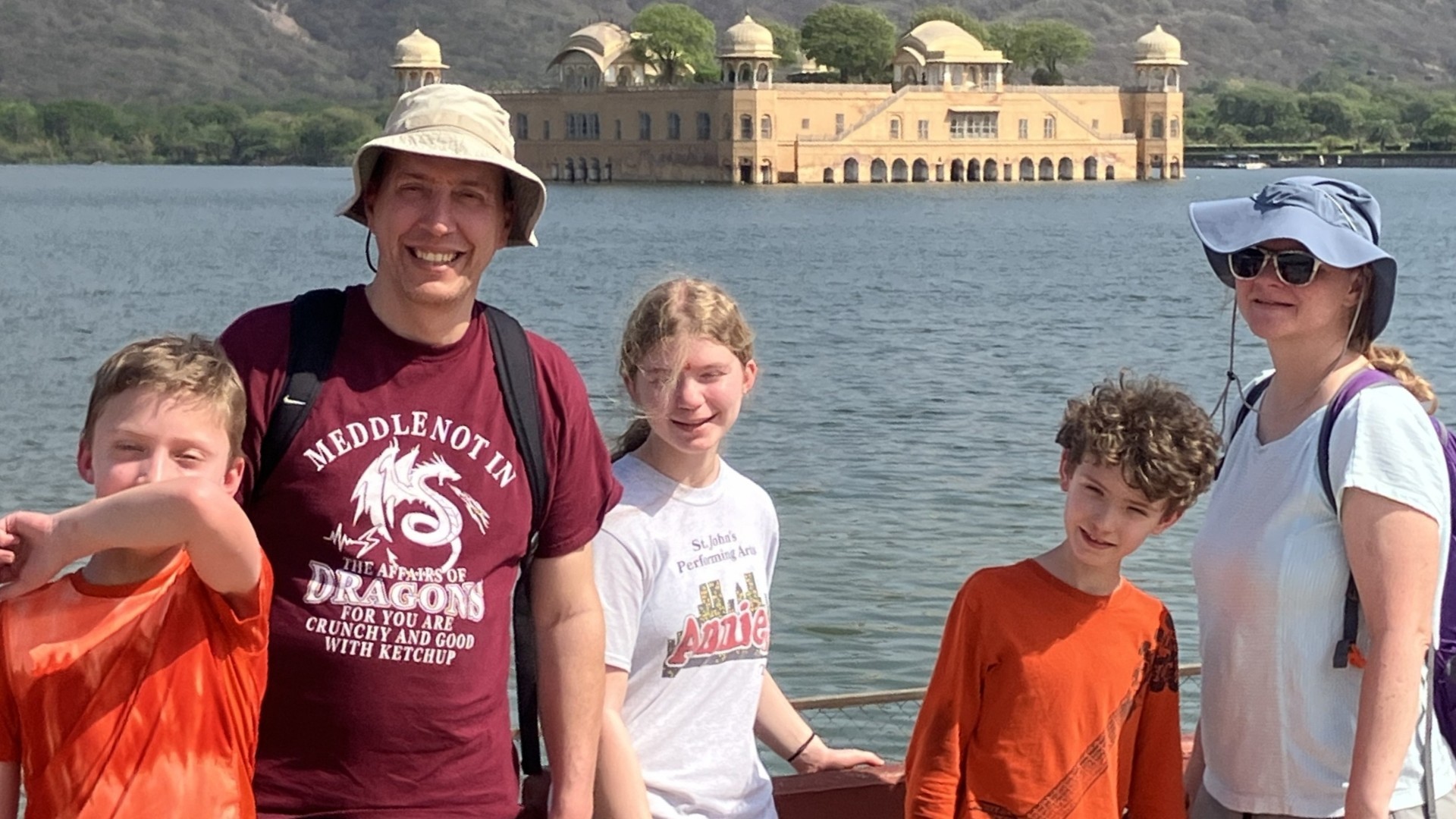
Mark and family stand on a platform next to a body of water with an ornamental building in the background. .

“Organ donation is a commitment, but not a very disruptive one,” Mark said. “The operation itself takes several hours, but I’m asleep for that. Then recovery is a few days in the hospital with books, visitors and the internet. There’s nothing hard about being a living organ donor!” | Photo provided by patient.

A light in the darkness

For most people, the idea of donating an organ feels overwhelming — something extraordinary reserved for someone else.

But for 49-year-old Cincinnati resident Mark, the decision started much smaller.

It started with a sign.

“I’d see signs pop up every once in a while about people needing a kidney,” Mark said. “At first, I just thought, ‘Wow, that’s a nice thing for someone to do.’ But it kind of stayed in the back of my mind.”

Years later, during the COVID-19 pandemic, that thought resurfaced in a much bigger way.

“Everything felt so heavy,” Mark said. “People were losing jobs. There was so much negativity in the news cycle. I remember thinking, ‘What can I do that’s good? What can I do that brings some light into all of this?’”

A few days later, as he turned into his neighborhood, he saw another sign: A Kidney for Elaine.

“And I thought, ‘I think it might be time to try doing that.’”

That small moment set Mark on a path that would eventually lead him to altruistically donate not only a kidney, but also part of his liver — giving two people a second chance at life.

One step at a time

Mark, a supervisor at Rotex in Cincinnati’s Northside neighborhood, never saw himself as a hero. In fact, he believes one of the biggest misconceptions about living donation is that it requires someone extraordinary.

“Anybody can do this,” he said. “People talk about it like it’s this unbelievable thing, but for me it was more about taking the time to learn about it and realizing how many safeguards are in place.”

After seeing the sign for Elaine, Mark called to see if he could help. Elaine had already found a donor, but Mark decided he still wanted to move forward.

“I figured if I could help save someone’s life with an extra body part, why not?”

That decision led him through the living kidney donor evaluation process. What surprised him most was how approachable it felt.

“The evaluation process was simple,” he said. “There was blood work and testing, but really, I just showed up to the hospital and spent maybe an hour getting checked out.”

He says many people misunderstand what living donation actually involves.

“Organ donation is a commitment, but not a very disruptive one,” Mark said. “The operation itself takes several hours, but I’m asleep for that. Then recovery is a few days in the hospital with books, visitors and the internet. There’s nothing hard about being a living organ donor!”

UC Health Transplant Program living donor coordinator Erica Hereda says education and transparency are key parts of helping potential donors feel comfortable exploring the process.

“One of the biggest things we try to emphasize is that people don’t have to make a decision on day one,” Hereda said. “We encourage individuals to simply start learning — ask questions, meet the team, understand the process and the protections in place for living donors. Every step is centered around donor safety.”

Kidney donation during the COVID-19 pandemic

In June 2020, Mark underwent kidney donation surgery at another health system. Within hours, his kidney was transported from Cincinnati to Walter Reed National Military Medical Center for a recipient in Virginia.

Before the end of the day, the transplant had already taken place.

Because of COVID-era restrictions and delays, Mark didn’t initially hear from his recipient. Nearly two years later, however, a letter finally arrived.

The recipient had written it shortly after surgery, but pandemic-related disruptions delayed its delivery.

“I was just happy knowing she was healthy and living,” Mark said. “That was the important part.”

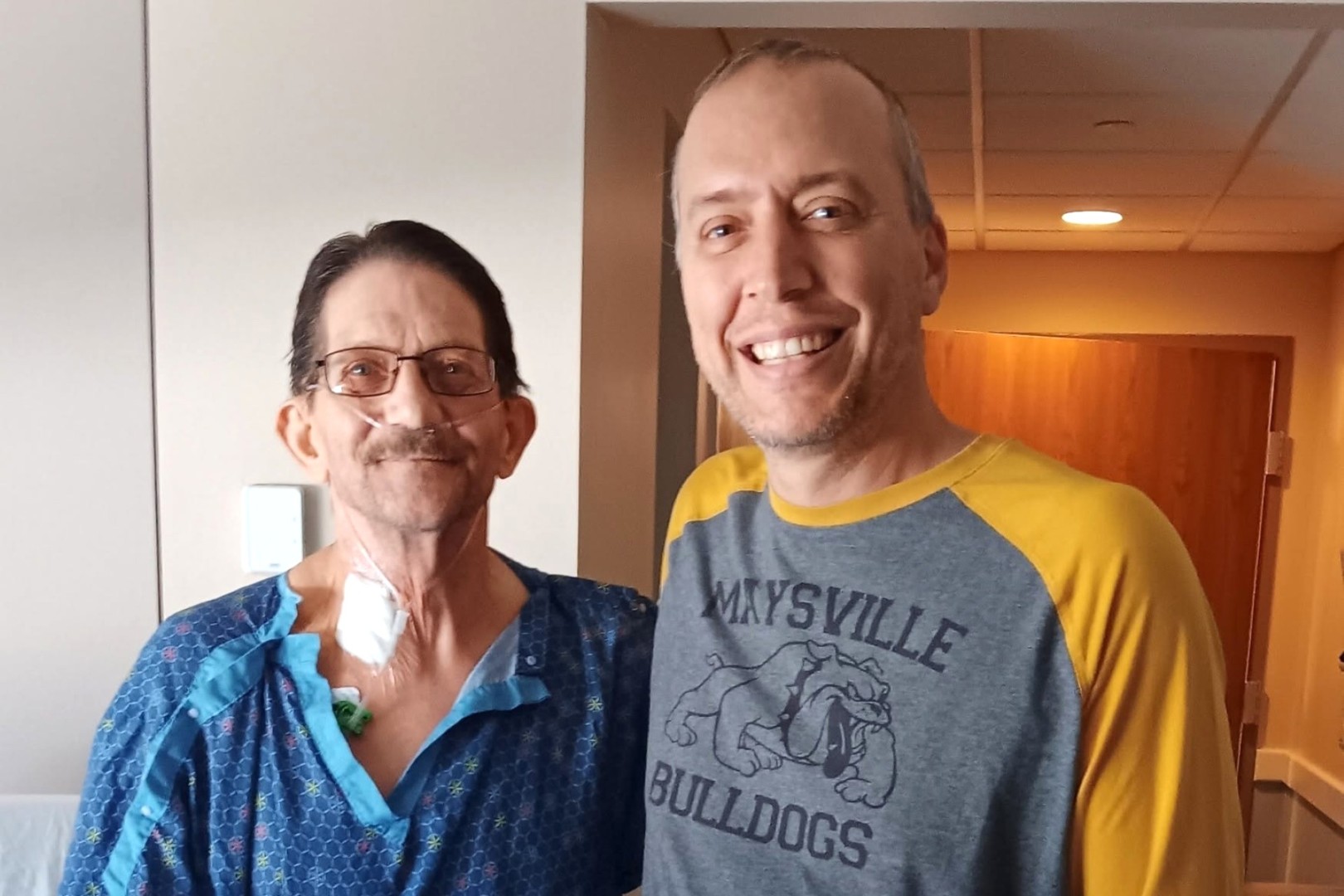
A patient recipient stands next to Mark in a medical setting.

"This man is my hero," Mike said. "I'm proud to call him my friend. He saved my life, along with the wonderful team at UC Health Transplant. I'll be forever grateful." | Photo provided by patient.

Inspired to do more

After donating his kidney, Mark couldn’t stop thinking about another opportunity to help.

“When I did the kidney donation, I thought, ‘Well, I know you can also donate part of your liver. Maybe sometime in the future I’ll do that too.’”

That “sometime” eventually became reality through the living donor program at UC Health.

Ironically, Mark says the hardest part of the process was simply figuring out where to start.

“At a Donate Life event, I found out UC Health did liver donations,” he said. “Then I waited a few months before getting more information, then told myself I’d get to it later, and eventually I finally sat down and looked up the liver transplant program.”

For Mike Hopkins, that first step would ultimately change everything.

In April 2024, Mike learned he had a liver tumor and cirrhosis. After undergoing radiation treatment, he was told he would need a liver transplant.

"I assumed I would receive a deceased donor liver," Mike said. "That was the only option I really researched."

After completing more than a year of testing and evaluations to become eligible for transplant, Mike received unexpected news.

"At one of my clinic visits, they told me there might be a living donor available," he said. "They said a man had come forward to donate and that we were a good match.”

Neither Mark nor Mike knew much about the other before surgery—but both remember the same chance encounter at UC Health.

While waiting to have blood drawn, Mike noticed a man in the waiting room in a Red Cross T-shirt.

"The feeling I received from this man is hard to explain," Mike recalled. "For some reason, I just knew he was my donor."

His daughter felt the same way.

"On the drive home, we both agreed we had this feeling about him," shared Mike.

A meeting neither will forget

On Sept. 8, 2025, Mark donated a portion of his liver to Mike.

Two days later, while both men were recovering on the same hospital floor, they were given the opportunity to meet.

When the door opened, Mike immediately recognized him.

"We were amazed," he said. "We knew it was him."

Mark laughed when Mike told him how he'd recognized him weeks earlier.

"He asked me if I had a lifeguard shirt," Mark said. "I realized he meant my Red Cross shirt. He had seen me during one of my appointments and just knew."

Today, the two share a bond that neither expected when the journey began.

"This man is my hero," Mike said. "I'm proud to call him my friend. He saved my life, along with the wonderful team at UC Health Transplant. I'll be forever grateful."

According to UC Health Surgical Director of Liver Transplant, Cutler Quillin, MD, stories like Mark’s demonstrate both the generosity of living donors and the life-saving potential of living donor liver transplantation.

“Living liver donation is an incredible act of generosity, but it’s also a carefully coordinated medical process built around donor safety,” Dr. Quillin said. “What makes Mark’s story especially powerful is that he approached donation thoughtfully, took the time to learn, and ultimately gave two people a chance at a healthier future.”

A recovery that changed his perspective

Despite donating part of his liver, Mark recovered quickly — something he hopes encourages others to at least learn more about living donation.

Just one week after surgery, he returned to work.

His coworkers quickly became familiar with his sense of humor about the experience.

“I brought a chair onto the assembly floor and put a sign on it that said, ‘Chair for liver donors only,’” he joked.

For Mark, the experience reinforced something he already believed: many people are capable of becoming living donors if they take the time to learn more.

“There are over 100,000 people on the transplant waiting list in America,” he said. “That’s fewer people than live in Greater Cincinnati. If enough people took those small steps to learn about donation, think about how many lives could change.”

“Living donation can feel overwhelming when people think of it as one enormous decision,” Hereda said. “But often it begins with a conversation, reading a story like Mark’s, or simply learning more about what living donation actually involves. Those small steps matter because they can ultimately save lives.”

Encouraging other to take the first step

Mark hopes people understand they do not need to commit immediately to becoming a donor. Instead, he encourages people to simply start learning.

“You don’t have to jump straight into organ donation,” he said. “Take small steps. Learn about it. Ask questions. Donate blood first if you want to see how helping someone feels.”

For Mark, it all started with a sign he happened to notice on his way home. Years later, he hopes others will take that same first step toward learning more and discovering how they might be able to help.“What surprised me most,” Mark said, “is that more people don’t do it.”

Why choose UC Health for living donation?

UC Health's nationally recognized Transplant Program guides living kidney and liver donors through every stage of the process, with a focus on education, safety and support.

  • You stay in control. Our living donor team provides clear information and confidential support so you can make decisions at your own pace.
  • We're here to help. From financial guidance to dedicated donor coordinators, we work to remove barriers and make the process easier to navigate.
  • Your gift can make a lasting difference. Living donor transplants can help recipients receive care sooner and achieve better long-term outcomes.

The gift of life begins with one step. Start the conversation.

Contact the UC Health living donor team by calling 513-584-8313 or completing our online interest form.
Contact Us

The gift of life begins with one step. Start the conversation to learn what’s possible. Contact the UC Health living donor team by calling 513-584-8313 or completing our online interest form.

Back to Top
x