Patient Stories

Greg’s Story: The High School Football Announcer Who Beat Prostate Cancer

Sep. 16, 2025

Greg Smallwood never thought prostate cancer would be part of his story. He felt fine—no symptoms, no warning signs. But one routine screening changed his life.


Greg smiles for camera after Flying Pig marathon

“I’ve gotten annual bloodwork for years,” Greg says. “When I turned 50, my doctor added a PSA test. It’s just one more box you check—quick, simple, and it can save your life.”

A PSA test or prostate-specific antigen test is a type of prostate cancer screening. It is a blood test that measures the level of a protein produced by the prostate gland, in the blood. Elevated PSA levels can be a sign of prostate cancer or other prostate conditions.

In late 2018, Greg’s PSA rose from the mid-2s to just over 5. He repeated the test—same result. “That’s when I asked, ‘What are we doing now?’” His physician referred him to the University of Cincinnati Cancer Center, where the team specializes in leading-edge care for genitourinary cancers.

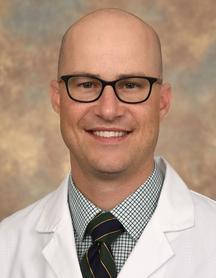
“Prostate cancer screening is a personal decision made with your primary care provider, based on age and health factors,” says Timothy Struve, MD, Co-Director of the Genitourinary Cancer Center at the University of Cincinnati Cancer Center and Radiation Oncologist. “In general, start around age 50 or earlier if you have risk factors or a family history. Knowledge is power. Knowing your PSA and watching the trend over time is a powerful tool. In Greg’s case, PSA screening caught his cancer at its earliest, most favorable stage. Early prostate cancers often come with the most choices—including the option of close surveillance.” 

The Academic Health Difference You Can Truly Feel

At the University of Cincinnati Cancer Center, Greg experienced what he calls “the smartest clinic I’ve ever seen”—a multidisciplinary visit where experts review a case together and then meet with the patient, one by one, to explain options.

“They sat me down, walked me through imaging and biopsy results, and laid out every path,” Greg recalls. “Same day. Clear, honest, and I made the final decision. It made something scary feel manageable.”

“When someone is newly diagnosed, it’s often the lack of an action plan—not the word ‘cancer’—that causes the most worry,” Dr. Struve points out. “Waiting for multiple appointments can be agonizing for patients and their families—I’ve seen that in my own family. In our multidisciplinary clinic, patients leave the same day knowing that experts have discussed every option and created a personalized plan, grounded in the latest research and technology.”

Because his cancer was found early and precisely mapped, Greg was a candidate for focal cryoablation—is a form of focal therapy in which clinicians use cryoablation—image-guided freezing with a cryoprobe (cooled by gases such as argon or nitrous oxide). This is a minimally invasive procedure that freezes and destroys only the cancerous area while preserving healthy tissue.

“I went in early, went home by noon, had a catheter on my leg for three days, and by the next week I was back to work,” he says. “I even felt good enough to consider walking a half marathon—I didn’t—but the point is, I felt that good.”

His first PSA after treatment dropped to 0.4 and stayed there for three years.

Connected Care for Our Community

Years later, when Greg’s PSA began to inch upward, he returned for new imaging and a biopsy. The tumor’s location made surgery risky, so the team recommended targeted radiation—five days a week for several weeks.

“The hardest part was the drive,” Greg laughs. “The people were wonderful, and I had no side effects. We even worked the schedule around holidays and my work travel. It was true teamwork.”

To enhance the effectiveness of treatment, Greg also took a short-term testosterone-blocking medication. “I was nervous about side effects, but I had none. We chose a pill so I could stop quickly if needed. I didn’t need to.”

Today, his PSA is low and stabilizing. “They reminded me: I still have a prostate, so I’ll still have a PSA. What matters is the trend—and mine is headed the right direction.”

Greg Smallwood receives an award during basketball game

The Future of Healthcare, Now Within Reach

Greg’s journey shows how possibility-driven research and multidisciplinary expertise lead to better paths—often with less invasive options and faster recovery.

“Being treated at an academic center means they’re always looking for the best approach for you,” he says. “They explained new options clearly and matched them to my specific cancer. I felt informed, confident, and supported.”

“It’s an exciting time to care for patients with prostate cancer,” Dr. Struve reflects. “Over the last five to 10 years, advances in focal therapy and contemporary radiation mean we can fairly routinely cure prostate cancer with minimal lasting effects. More often than not, my patients tell me they feel no different after treatment than they did before their diagnosis—which is remarkable. Prostate cancer now leads the way in reducing treatment burden and side effects, and many of these advances are extending into breast, colorectal, and lung cancers.”

Greg, now 67, lives an active life—working, traveling for trade shows, announcing high school football on Friday nights (a role he’s proudly held for 46 years), hiking, and walking long distances. “I look for the good in every day,” he says. “This was one more thing to do for my health so I can keep doing the things I love.”

Greg smiles for a photo on a hike with two others

Greg’s Message to Men (and the People Who Love Them)

  • Ask for a PSA blood test. “It’s one more line on your annual bloodwork—nothing to it—and it can save your life.”
  • Start the conversation at 50 (earlier if you’re higher risk or your clinician recommends it). “Don’t wait for symptoms. Prostate cancer can be quiet.”
  • Let your partner nudge you. “At trade shows, I tell women, ‘Your homework: make sure the men in your life get a PSA.’ It’s that simple.”
  • Choose a team that talks to each other. “The multidisciplinary clinic gave me everything I needed to decide. Same day. No guessing.”
Greg rings bell signaling the end of his treatment at the University of Cincinnati Cancer Center

Why Greg Chooses the University of Cincinnati Cancer Center

  • Academic Health you can feel: possibility-driven care, grounded in research, designed around you.
  • Connected expertise: coordinated specialists who plan together and stay aligned with your life.
  • Breakthroughs within reach: advanced imaging, focal therapies, and modern radiation that prioritize outcomes and quality of life.

“Early detection gave me options,” Greg says. “The right team helped me choose the best one. I’m planning to live to 100—and this care helped me buy more time on the other end.”

To schedule an appointment with a prostate cancer expert, call 513-585-UCCC.

x