Patient Stories

New Hope for Patients with Colon Cancer: Precision Chemotherapy

Nov. 7, 2025

Trisha Wilhoit is an East Tennessee resident whose own willingness to go the extra mile to find boundless care at University of Cincinnati Cancer Center allowed her to experience the life-changing power of an innovative new cancer treatment.


Trisha Wilhoit kisses her sister after surgery

Trisha’s journey reflects what is possible when hope meets innovation.

  • Trisha needed more advanced care for her Stage 4 colon cancer than was available to her where she lives, so she sought out the pioneering team at the University of Cincinnati Cancer Center.
  • Traditional chemotherapy treatment would have been used on her whole body, with significant side effects. But at the UC Cancer Center, she received a groundbreaking hepatic artery infusion pump that specifically targeted the liver, delivering a more aggressive and effective therapy with fewer side effects.
  • UC Cancer Center is one of the few institutions equipped to provide this innovative treatment, making it a beacon of hope for patients nationwide.

"When I first heard the diagnosis, it was devastating," Trisha recalls. "But the team here at the UC Cancer Center didn’t see it as the end of the road. They had this incredible 'I will, I can, we will do this' attitude that gave me hope."

If you or a loved one needs to connect with the cancer experts at University of Cincinnati Cancer Center, call 513-585-UCCC.

Trisha’s Journey Through Advanced Colon and Liver Cancer

Trisha's story began in October 2023 when she was diagnosed with Stage 4 colon cancer that had aggressively spread to her liver. Facing limited options in her hometown in East Tennessee, she turned to UC's Cancer Center, renowned for its cutting-edge treatments. It was a decision that would save her life and redefine her understanding of hope, strength and love.

For Trisha, learning about the revolutionary hepatic artery infusion pump began a rigorous yet hopeful journey. She made the five-hour drive from Tennessee to Cincinnati every two weeks for treatment. The device delivered chemotherapy directly to her liver tumors, enabling her body to fight back against the cancer that once seemed unstoppable.

After months of chemo, Trisha's tumors had shrunk significantly, and the cancer in her colon was nearly eradicated. This success paved the way for a liver transplant—a procedure that would replace her cancer-affected liver with a healthy one.

For patients like Trisha, surgery, such as liver resection or transplant, becomes a viable treatment option once liver tumors have been sufficiently reduced by the pump’s high-dose chemotherapy. This curative resection approach, paired with advanced medical oncology, is transforming outcomes for patients with metastatic liver cancer and bile duct cancer.

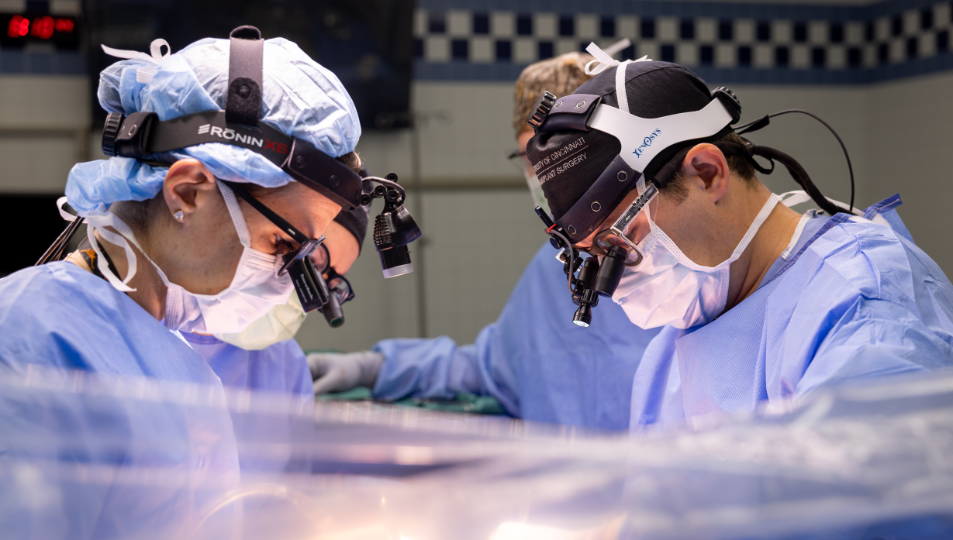
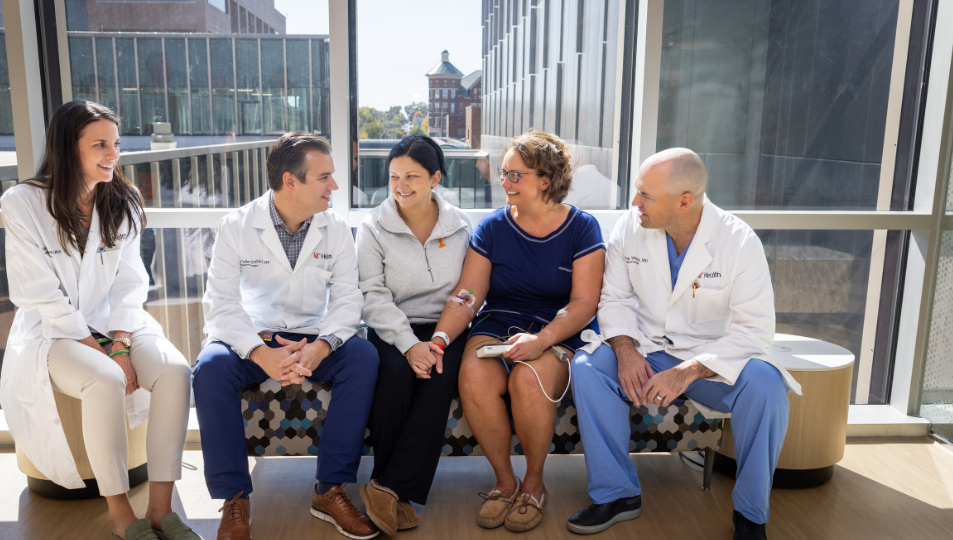
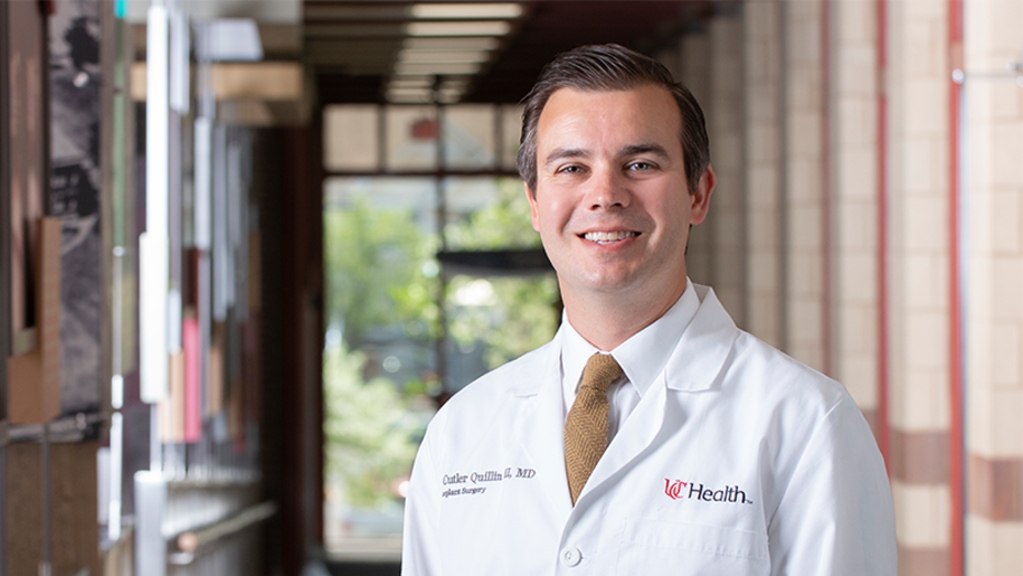
The transplant’s success was an example of the benefits of multi-disciplinary collaboration with access to so many expert specialists in one place."We took the liver next door, prepared it, and transplanted it," explained Dr. Cutler Quillin, UC Health Surgical Director of Liver Transplant. "Trisha stayed in the hospital for about a week, and just six weeks post-transplant, she showed remarkable recovery."

Now, Trisha is cancer-free and thriving, thanks to the advanced care she received. But her journey is more than a testament to medical science—it’s a story of gratitude and resilience. "Every day is a gift," she said, her voice filled with emotion. “I’m so thankful for this team, for the pump, for the chance to keep living and loving the people around me."

How the Pump Works: Delivering Targeted Chemotherapy

The innovative treatment was unlike anything Trisha had encountered. The hepatic artery infusion (HAI) pump that helped change Trish’s trajectory is a wireless device roughly the size of a hockey puck. The HAI pump delivers high doses of chemotherapy directly to the colon, targeting tumors and liver metastases with precision while sparing the rest of the body from debilitating side effects seen in systemic chemotherapy.

Unlike traditional chemotherapy, which affects the entire body, regional chemotherapy via the hepatic artery infusion pump targets liver metastases directly. This approach is particularly effective in cases of unresectable colorectal liver metastases and intrahepatic cholangiocarcinoma, offering hope where systemic treatments often fall short.

"This pump is a game-changer," said Dr. Greg Wilson, University of Cincinnati Cancer Center Surgical Oncologist specializing in GI cancer treatments. "It allows us to treat colon tumors aggressively and effectively, often shrinking them to the point where surgery or even transplant becomes a viable option."

The HAI pump operates through a catheter connected to the hepatic artery. By focusing chemotherapy directly on the colon, it minimizes systemic complications and allows higher doses of treatment to be delivered precisely where it’s needed most.

"The process was challenging," Trisha admitted. "But knowing I had this incredible technology and team fighting alongside me kept me going."

Hope for Patients Nationwide: Advancing Colon Cancer Treatment

The hepatic artery infusion pump represents more than a medical device; it’s a lifeline for patients like Trisha, offering them a fighting chance in the face of dire diagnoses. 

Dr. Wilson emphasized the broader implications of the pump’s success. "This is just the beginning," he said. "We’re not only treating patients more effectively but also paving the way for future advancements in cancer care."

As Trisha recovers, her story inspires others battling cancer and reminds them of the boundless power of perseverance, innovation and human connection. "Be grateful for each day," she said. Just love everybody around you so big."

Learn more about the innovative cancer treatments available through the University of Cincinnati Cancer Center or call 513-585-UCCC to get connected to our expert team.

x